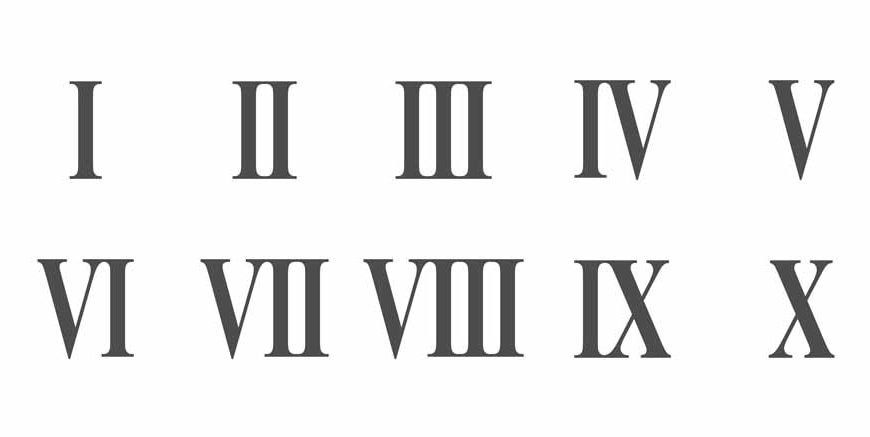
Imagine walking through the dusty, cobbled streets of an ancient city thousands of years ago. If you looked up at the stone buildings or checked the market stalls to buy some fresh fruit, you would not see the numbers we use today. Instead, the ancient Romans used the letters of their own alphabet to keep track of their gold coins, count their sheep, and record the years. Because they often carved these symbols into hard stone or wood, they used letters with straight lines that were easy to chisel.
Learning their counting system is exactly like learning a secret historical code. Today, we are going to crack one specific code together. We are going to figure out how to translate a very interesting sequence into a number that we easily recognise in our modern maths lessons. Let us find out exactly what hides behind these four ancient letters.
Understanding the Basics of CCXX
Before we can read the full sequence, we need to break it down into smaller pieces. What happens when you put two C’s and two X’s next to each other? To understand CCXX, we first need to look at the individual letters and what they represent.
In this ancient counting system, the letter ‘C’ stands for the number 100. You can easily remember this little fact because ‘C’ is the first letter of the word ‘century’, which means exactly 100 years. The letter ‘X’, on the other hand, stands for the number 10. A great way for kids to remember this is to think of an ‘X’ as two hands crossing over each other, holding up all 10 fingers. So, we now have our basic mathematical building blocks ready to use.
Read More – Teaching Kids About Roman Numerals
Understanding the CCXX Roman Number
Now that we know what the individual letters mean, we need to stick these blocks together to find out the total value of the CCXX roman number. The Romans had a very simple and logical rule for their writing: when you put letters of the same value next to each other, or when a smaller letter comes directly after a larger one, you simply add them all up from left to right.
Let us do the maths together. We have a C (100) plus another C (100). That instantly gives us 200. Then, we look at the next part: we add an X (10) and another X (10), which gives us 20. When we put the hundreds and the tens together (200 + 20), we get our final, decoded answer: 220. It is just like stacking toy bricks to build a tall wall; you add piece after piece until the structure is complete.
Examples of CCXX in Roman Numerals
To make this concept even clearer for children, let us try to spot CCXX in roman numerals in the real world. Imagine you are reading a massive, thrilling adventure book about brave knights and fire-breathing dragons. You flip past chapter 100, then chapter 200, and eventually, you land on chapter 220. If that fantasy book used the ancient counting system, the top of the page would proudly display these four letters.
Think about history, too. If an ancient emperor built a magnificent temple in the year 220 AD, the stonemasons would have proudly carved these exact letters above the grand entrance. Or, if a pirate found a wooden treasure chest filled with 220 shiny silver coins, he would have painted these letters on the lid to keep track of his hidden loot!
Fun Ways to Remember CCXX Roman Numerals
Practising maths should always feel like playing a fun game rather than doing a boring chore. When teaching children about CCXX roman numerals, try using physical objects around the house. Grab some wooden building blocks or cut out pieces of bright, coloured paper. Write ‘C’ on two big red blocks and ‘X’ on two smaller blue blocks.
Ask your child to group the red blocks together to make 200, and the blue blocks together to make 20. Sliding them all into one row visually shows them exactly how the number 220 is built. You can even challenge them to create the numbers that come right before and after it, like CCX (210) or CCXXX (230), so they can see the pattern growing. This hands-on method turns a tricky historical concept into a brilliant afternoon puzzle.
Read More – The Importance of Math in Everyday Life
Conclusion
Learning how ancient civilisations counted teaches us much more than simple addition. It shows us that human beings have always found clever, creative ways to solve problems, record their histories, and communicate with one another. These specific letters are like tiny, magical time machines, connecting our modern classroom maths lessons directly to the bustling markets of an empire that existed long ago.
The next time you see an old building with letters carved above the doorway or an antique clock face with strange markings, remember that you possess the secret key to read them perfectly. To uncover more fascinating educational tips and support your child’s brilliant learning journey, explore the EuroKids Blog.
FAQs
What number does CCXX represent?
It represents the number 220. The two C’s stand for 200 (100 + 100) and the two X’s stand for 20 (10 + 10).
Why do we add the letters together in this sequence?
Because the larger letters (C) are placed before the smaller letters (X), the rules state that you simply add their values together from left to right.
How would you write 221 in this ancient system?
To write 221, you would simply add the letter ‘I’ (which stands for 1) to the end of the sequence, making it CCXXI.