Learning English grammar becomes fun and easy when children understand how words work together in a sentence. One such important part of grammar is the adverb. Adverbs help us describe actions more clearly and make sentences interesting. In Indian schools, adverbs are taught from the primary level to help students improve speaking, reading, and writing skills.
Here, we will explain what is an adverb. We also provide simple definitions, share examples, and offer activities and exercises to help children learn adverbs in an enjoyable way.
What Is an Adverb?
To understand what is an adverb, let us begin with a simple idea.
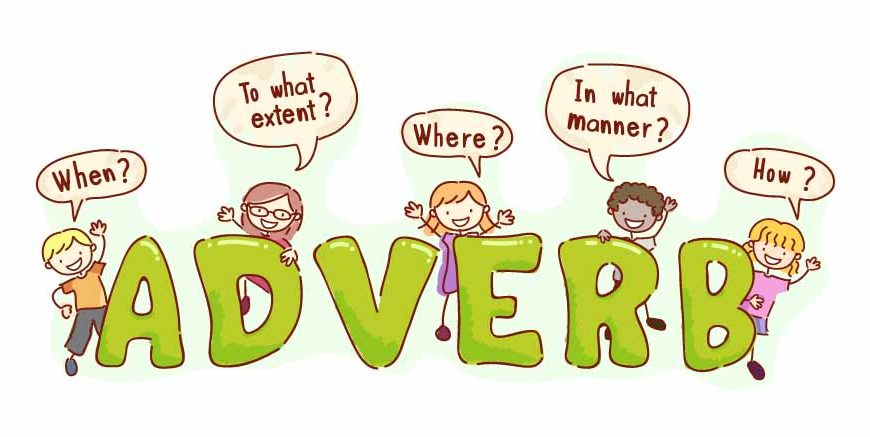
An adverb is a word that tells us more about a verb, an adjective, or even another adverb. It usually answers questions like:
- How?
- When?
- Where?
- How often?
Read More – Engaging English Grammar Rules for Kids
Adverb Simple Definition
An adverb’s simple definition is:
An adverb is a word that describes how, when, where, or how often an action happens.
Example:
- She runs fast.
- He reads quietly.
- We will go tomorrow.
Here, the highlighted words are adverbs because they describe the action.
Why Are Adverbs Important in English Grammar?
Adverbs play an important role in adverb grammar because they:
- Add detail to sentences
- Make speech more interesting
- Help express time, place, and manner
- Improve writing and storytelling
In Indian classrooms, teachers encourage students to use adverbs to make essays and answers more descriptive.
Adverb Grammar Explained for Kids
In adverb grammar, adverbs are usually placed:
- After the verb
- Before the adjective
- At the beginning or end of a sentence
Examples:
- She sings beautifully.
- It is very hot today.
- Yesterday, we had a holiday.
Understanding placement helps children use adverbs correctly.
Read More – Guide to Teaching English Grammar for Kids
Types of Adverbs
There are different types of adverbs that children learn in school.
1. Adverbs of Manner
These adverbs tell how something happens.
Examples of some adverbs:
- Slowly
- Quickly
- Happily
- Loudly
Example sentence:
- The child spoke politely.
2. Adverbs of Time
These tell when an action happens.
Examples:
- Today
- Yesterday
- Tomorrow
- Now
Example:
- We will study tomorrow.
3. Adverbs of Place
These tell where something happens.
Examples:
- Here
- There
- Outside
- Inside
Example:
- The children are playing outside.
4. Adverbs of Frequency
These tell how often something happens.
Examples:
- Always
- Often
- Sometimes
- Never
Example:
- I always brush my teeth.
5. Adverbs of Degree
These tell how much or to what extent.
Examples:
- Very
- Too
- Quite
- Almost
Example:
- It is very hot in summer.
Read More – Transition Words for Kids
Some Adverbs Used in Daily Life
Children hear and use some adverbs every day without even realising it.
Examples:
- Please sit quietly.
- I will come soon.
- He is very happy.
- She often helps her mother.
Learning these common adverbs helps improve spoken English.
Adverbs Exercises for Kids
Practising grammar is the best way to learn. Here are some easy adverb exercises suitable for kids.
Exercise 1: Identify the Adverb
Underline the adverb in each sentence:
- The teacher spoke clearly.
- We reached home late.
- He always completes his homework.
Exercise 2: Fill in the Blanks
Fill in the blanks with suitable adverbs:
- The dog barked _______. (loudly / quietly)
- She finished her work _______. (quickly / slowly)
Exercise 3: Choose the Correct Adverb
- He ran (fast / yesterday).
- I will call you (soon / happily).
These adverb exercises make learning fun and interactive.
Adverb Activities for Classroom Learning
Teachers often use adverb activities to help children learn better.
Fun Adverb Activities
- Acting games (walk slowly, talk loudly)
- Sentence building games
- Storytelling using adverbs
- Matching adverbs with verbs
Such activities are common in Indian primary schools to make grammar enjoyable.
Read More – Fun English Grammar Games for Kids
Reading and Adverbs
Strong reading skills help children understand how adverbs are used in stories and sentences.
Facts About Reading
Here are some useful facts about reading:
- Reading improves grammar understanding
- Reading helps learn new adverbs naturally
- Children who read regularly use better vocabulary
- Reading storybooks improves sentence structure
This is why teachers encourage daily reading at home and school.
Role of Oxford Owl, Read Write Inc
Many parents explore programmes such as Oxford Owl and Read Write Inc to help children improve their reading and grammar skills.
Such programmes focus on:
- Phonics
- Reading fluency
- Word understanding
- Sentence building using grammar, like adverbs
They support early learning in a structured way.
Oxford Owl Reading and Grammar Learning
Oxford Owl reading resources include stories and exercises that help children:
- Identify adverbs in sentences
- Understand word meanings
- Improve comprehension
Grammar learning becomes easier when combined with reading practice.
Common Mistakes Children Make with Adverbs
Children may sometimes:
- Use too many adverbs
- Place adverbs incorrectly
- Confuse adjectives and adverbs
Example:
Mistake:
- She runs quick
- Correct:
- She runs quickly
Regular practice helps avoid these mistakes.
How EuroKids Builds Strong English Foundations
Learning English at a young age becomes natural when children engage with stories, songs, real-life objects, and interactive activities. Instead of rote memorisation, EuroKids focuses on developing language skills through meaningful experiences that make reading, writing, speaking, and listening enjoyable.
At EuroKids, foundational English concepts are taught using storytelling, picture books, phonics-based exercises, and interactive vocabulary games aligned with the HEUREKA – Visible Thinking Curriculum. This approach helps children connect words to ideas, build comprehension skills, and express themselves confidently.
Activities such as narrating short stories, describing objects, and participating in “Think-Pair-Share” or “See-Think-Wonder” routines reinforce language understanding. Children learn grammar, vocabulary, sentence formation, and pronunciation in ways that feel playful yet purposeful.
With a child-focused, activity-driven methodology refined over 20+ years and implemented across 1600+ preschools, EuroKids emphasises communication and confidence first. As children enjoy English learning, fluency, reading comprehension, and writing skills develop naturally, laying the groundwork for strong lifelong language abilities.
Tips to Learn Adverbs Easily
Here are some simple tips for kids:
- Read storybooks daily
- Listen to teachers carefully
- Practise writing sentences
- Use adverbs while speaking
- Play grammar games
Learning grammar becomes easier with daily practice.
Learning Adverbs the Fun Way
Understanding what is an adverb is an important step in learning English grammar. Adverbs help children describe actions clearly and make sentences lively. With simple definitions, examples, adverb exercises, and engaging adverb activities, children can master adverbs easily.
In the Indian learning context, combining grammar with reading through stories and structured programmes helps students become confident English users.
To explore more learning ideas, simple explanations, and early childhood resources, parents
can visit the EuroKids Blog. Those who wish to understand the preschool journey better or
explore enrolment options can find complete information on the EuroKids Preschool Admission
Page, where learning is designed to be joyful, engaging, and child-friendly.