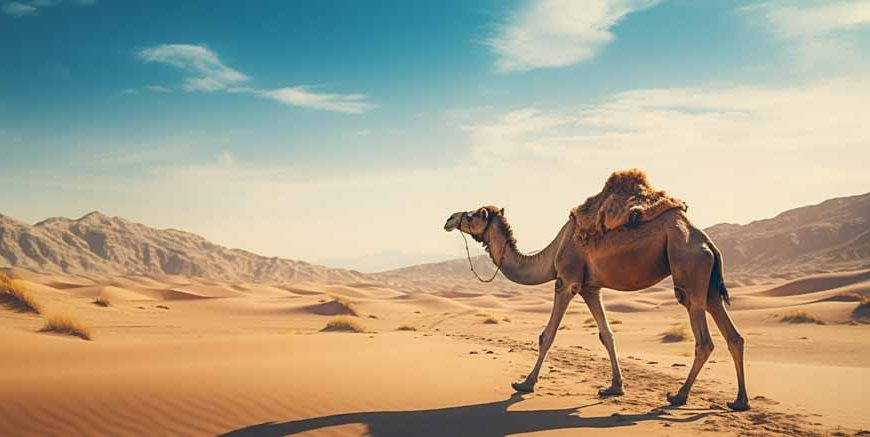
When students first learn about desert animals, one question always comes up: where do camels store water? Camels live in some of the driest places on Earth where water is scarce and temperatures are extremely high. Yet, they survive and travel long distances without drinking water every day.
This ability makes camels one of the most fascinating animals to study. Many people believe that camels carry water inside their humps, but science tells a different story. Understanding how camels manage water helps children learn about animal adaptation and how living beings adjust to their environment to survive.
In this blog, we will explore where does a camel store its water, what camels actually keep in their humps, how their bodies conserve water, and how long they can survive without drinking. This topic not only clears common misconceptions but also builds strong scientific thinking in young learners.
The Common Belief About Camel Humps
A very popular idea is that camels store water in their humps. Many books, cartoons, and stories show camels as animals that carry water in a big bag on their backs. Because the hump is large and noticeable, people assume it is filled with water. This belief has been passed down for generations, which is why students often ask questions like does a camel store water in its hump or camel stores water in its hump.
However, this belief is not correct. Camels do not keep water in their humps. The hump has an important role, but that role is not direct water storage. To understand camel survival properly, we must learn what is actually inside the hump.
Read More – Interesting Camel Facts for Kids
Do Camels Store Water in Their Humps
The clear scientific answer to do camels store water in their humps is no. Camels do not carry water in their humps. The hump is not a water tank. It is a fat storage area.
So, when students ask:
- do camels hold water in their humps
- do camels humps store water
- does a camel store water in its hump
The correct answer is that the hump stores fat, not water. This fat helps the camel survive in harsh desert conditions when food and water are limited.
What Does a Camel Store in Its Hump
If camels do not store water in their humps, then what does a camel store in its hump? The answer is fat.
The hump is made of fatty tissue. This fat is a reserve of energy. When food is scarce, the camel’s body breaks down this fat to get energy. During this process, a small amount of water is also produced as a by-product.
So, when students ask what do camels store in their humps, the correct response is that camels store fat. This fat helps in:
- Providing energy
- Helping the camel survive long journeys
- Producing metabolic water
This explains the real camel hump use in a scientific way.
Read More – Camel Essay for Kids
How Camel Water Storage Actually Works
Now we come to the real answer to where do camels store their water. Camels store water inside their bodies, not in their humps. Their water is stored in their blood and body tissues.
Camel red blood cells are special. They are oval-shaped and can expand to hold large amounts of water. This helps in camel water storage inside the body without damaging the cells.
So when students ask:
- where do camel store their water
- where camel store water
- where does a camel store its water
The correct answer is that camels store water in their bloodstream and body tissues.
Camel Water Storage Capacity
One of the most amazing facts about camels is their ability to drink large quantities of water in a short time. Their camel water storage capacity is very high. A camel can drink up to 100 litres of water in just a few minutes when water is available.
This water is absorbed quickly into the bloodstream. The body then slowly uses this water over many days. This is why camels can survive in deserts for long periods.
When students ask how many days camel store water, the answer depends on temperature, workload, and food availability. In cooler conditions, camels can survive up to seven days or more without drinking water. In extreme heat, this time becomes shorter.
Read More – Animal: Habitats, Movements and their Behaviour
How Long Can a Camel Survive Without Water
Many children are curious about whether a camel can survive without water. Yes, camels can live for several days without drinking water. In some cases, they can survive for more than a week.
This does not mean they never need water. It means their bodies are extremely efficient at conserving it. Camels lose very little water through sweat and urine. Their bodies are designed to hold onto water as long as possible.
This ability makes camels perfect desert animals.
Where Did Camel Store Water According to Old Beliefs
Earlier, people did not know much about animal biology. So when they saw a camel’s hump, they believed that where did camel store water must be inside the hump. This idea came from observation, not scientific study.
Modern science has shown that this is incorrect. Camels store water in their body systems, not in the hump.
Why the Hump Is Still Important
Although the hump does not store water, it is still vital. The fat stored in the hump:
- Provides energy
- Produces water when broken down
- Helps the camel survive when food is not available
Some people use the term camel hump water storage, but this is only partly true. The hump indirectly helps in water production through fat breakdown, but it does not hold liquid water.
Comparison Between Water Storage and Fat Storage
Real camel water storage happens inside the body.
Fat storage happens in the hump.
This difference is important for children to understand.
- Water is stored in blood and tissues
- Fat is stored in the hump
This clears confusion about camel stores water in its hump and helps students develop accurate scientific knowledge.
Other Adaptations That Help Camels Survive
Camels have many adaptations that support how camel store water and conserve it:
- Thick fur that protects from heat
- Special kidneys that reduce water loss
- Nostrils that close during sandstorms
- Wide feet that help walk on sand
- Ability to tolerate high body temperatures
All these features explain why a camel can survive without water for long periods.
At EuroKids, such scientific concepts are taught through real-life examples and visual learning using the HEUREKA Curriculum.
Why This Topic Is Important for Students
Learning where do camels store water helps students:
- Understand adaptation
- Think scientifically
- Question common myths
- Learn correct biological facts
It builds curiosity and develops a love for learning science.
Conclusion: Learning with EuroKids
Understanding where camels store their water helps children learn how animals adapt to their surroundings. It teaches them that science is about observation, evidence, and clarity. Camels do not store water in their humps. The hump stores fat, while water is stored in the body. This simple fact removes confusion and builds strong biological knowledge.
The EuroKids Blog offers engaging and accurate learning content that supports children, parents, and educators in building foundational science concepts. Each topic is explained in a way that is simple, factual, and age-appropriate.
Preschool Admission for 2026-27 is now open at EuroKids. Enrolling your child means giving them a joyful, safe, and inspiring start to their learning journey where curiosity, confidence, and understanding are nurtured every day through structured and engaging education.
Frequently Asked Questions
1. Where do camels store water
Camels store water in their bloodstream and body tissues. This answers where a camel stores its water correctly.
2. Do camels store water in their humps
No, do camels store water in their humps is a myth. They store fat in their humps.
3. What does a camel store in its hump
The hump stores fat. So camel stores in its hump fat, not water.
4. How long can a camel survive without water
A camel can survive without water for several days, sometimes more than a week.