Every great superhero story needs a reliable, quiet sidekick. In the loud, flashing world of physical science, where shiny gold, heavy iron, and valuable silver usually steal all the spotlight, there is a quiet, silvery champion hiding in plain sight. You might not instantly recognise its face, but it is secretly protecting your favourite foods from spoiling and helping hold your complex household electronics together safely. Instead of looking up at distant stars or deep into a sprawling jungle to find something amazing, today we are going to look right inside your kitchen cupboards. We are going to explore a fascinating, ancient material that has quietly helped human beings build civilisations for thousands of years.
Understanding the Tin Element
The tin element is a highly soft, incredibly pliable, silvery-white substance naturally found buried deep in the earth’s rocky crust. If you were lucky enough to hold a pure, solid block of it in your bare hands, you would immediately notice something quite strange and magical. If you try to bend a pure piece of this material, it actually makes a bizarre, high-pitched screaming sound! Scientists affectionately call this strange noise the ‘tin cry’, and it happens because the tiny, microscopic crystals inside the material are physically breaking apart and violently rubbing against each other when you force them to bend.
Beyond its strange voice, this material is famous for its incredible resistance to harsh elements. It does not rust easily and rarely corrodes when exposed to damp air or salty water. This unique resistance makes it the ultimate protective shield for other, much weaker materials that would otherwise quickly crumble away into orange rust
Read More Ways to Engage Children with Science
Is Tin a Metal or a Nonmetal?
A very common question in early primary science classes is whether tin is a metal or a nonmetal. The answer is completely straightforward: it is true metal.
However, you must understand that it is not a heavy, solid, unbreakable metal like thick structural steel or heavy cast iron. In the scientific community, it is actually classified as a ‘post-transition metal’. This means it is highly malleable, so a blacksmith can easily hammer it flat into extremely thin, flexible sheets without it suddenly snapping into sharp pieces. Because it melts at a fairly low temperature compared to other rocks, it is incredibly easy for scientists and builders to melt it into a bubbling liquid and mix it seamlessly with other materials.
Tin Atomic Number and Sn Periodic Table
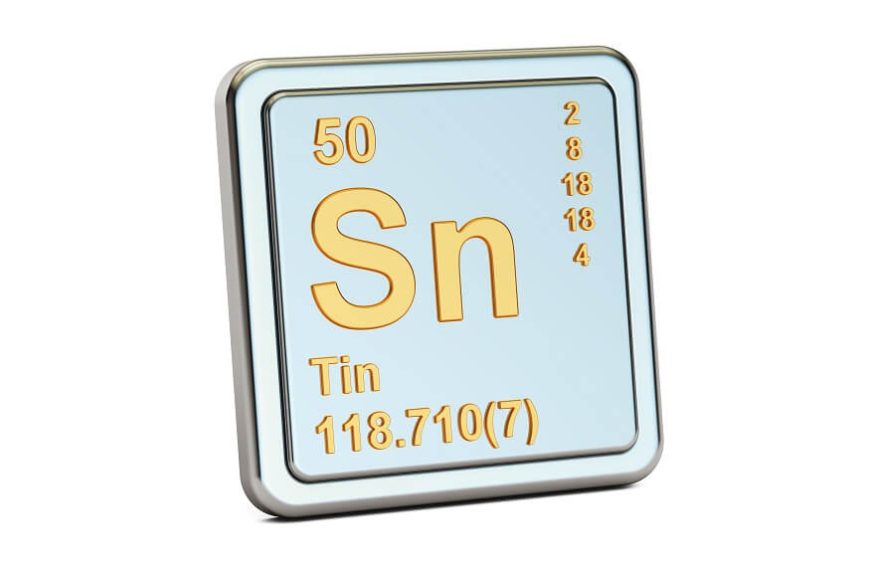
The Sn symbol in the periodic table is officially used worldwide to represent it. You might logically wonder why the chart does not just use a simple ‘T’. This is because ancient scientists loved using old languages! The symbol ‘Sn’ comes directly from the old Latin word ‘Stannum’.
Furthermore, every single material on that chart also gets its own special, unique identity number. The atomic number of tin is exactly 50.
Read More Discovering the Periodic Table Elements for Kids
Brilliant Everyday Uses of Tin Metal
- Protecting Your Baked Beans: When you crack open a can of hot soup or sweet baked beans for lunch, you are not actually opening a solid tin can. The container is usually made of strong, heavy steel that has been rapidly dipped in a super-thin layer of this protective metal to completely stop the steel from rusting and ruining your delicious food.
- Connecting Your Electronics: If you carefully break open a broken television remote or an old computer, you will see a flat green board covered in tiny silver bumps. This is called solder. It is a melted mixture of metals that acts exactly like electrical glue, allowing invisible power to flow safely through the wires to your glowing screens.
- Ringing the School Bell: Thousands of years ago, ancient builders accidentally discovered that mixing this soft metal with hot copper creates a brand-new, super-strong metal called bronze. This ancient mixture is still widely used today to make massive church bells and shiny musical cymbals because it produces a beautiful, loud, echoing sound.
- Making Perfectly Flat Windows: To manufacture perfectly flat, clear glass windows for your living room, hot liquid glass is carefully floated directly onto a massive pool of molten tin! Because the heavy metal pool is perfectly smooth, the glass sets beautifully without any bumps or ripples.
Read More – What Is Metal Made Of?
Conclusion
Science is rarely just about explosive, dangerous reactions; more often, it is about quiet, steady, and beautiful reliability. It is genuinely thought-provoking to realise that a soft, easily bent material that quietly cries when you fold it is actually heavily responsible for preserving our global food supply, ringing our loud musical instruments, and safely powering the complicated electronics we rely on every single day. By looking closely at the hidden building blocks of our physical universe, children quickly learn that even the quietest, softest materials have immense, world-changing power. We must always encourage young, developing minds to look past the shiny, obvious things and discover the secret heroes holding the modern world together.
To discover more fascinating scientific facts, highly practical parenting advice, and wonderful ways to nurture your child’s natural curiosity, explore the EuroKids Blog and secure their vibrant educational future today through EuroKids Preschool Admission.
FAQs
1. Why do we still call them ‘tin foil’ hats or baking trays
People still use that old phrase purely out of habit! Over a hundred years ago, kitchen foil was actually made of this material, but today, almost all shiny kitchen wrap is made of significantly cheaper, lighter aluminium.
2. Can you find pure blocks of this material out in the wild?
No, you cannot easily find pure blocks of it lying around on the muddy ground. It is usually hidden deep within dark, heavy rocks called ores, which miners have to dig up and process extensively in hot factories to extract pure silver.
3. Is this specific material dangerous for young children to touch?
In its normal, everyday metallic form, it is completely safe and entirely non-toxic, which is exactly why it is universally trusted worldwide to coat the inside of our food cans and line our kitchen baking equipment.