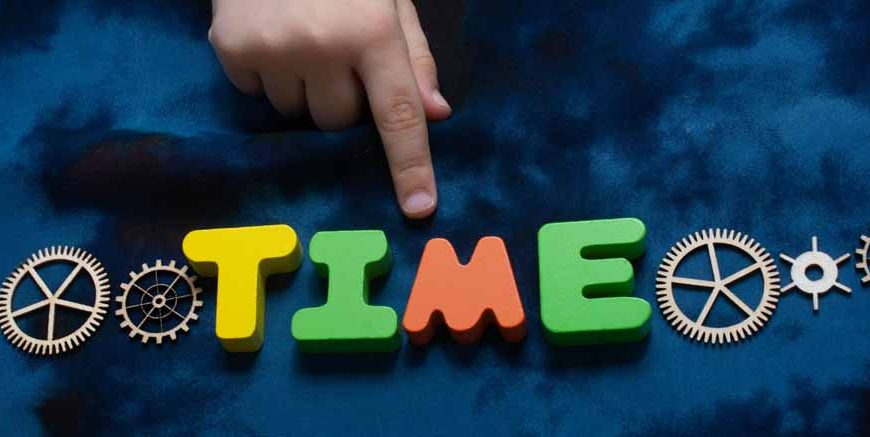
Time is something we use every day, yet it’s often hard to explain, especially to children. We wake up on time, go to school on time, finish homework on time, and wait patiently for birthdays and holidays. Time helps us understand when things happen and how long they take.
For young learners, time begins as a feeling, such as the morning sunlight, afternoon play, and bedtime stories. Gradually, it becomes more structured through clocks, calendars, and routines. Understanding time is an important life skill. It helps children feel secure, organised, and confident in their daily lives. In this blog, we’ll explore what time is, why it matters, how it’s measured, how different units of time are connected, and how children can understand time through everyday examples.
What Is Time?
In simple words, time is the continuous flow of events from the past, through the present, and into the future. It’s a way of knowing when things happen and how long they take. Time helps us understand sequences of events and the duration between them. Time cannot be seen directly, but we experience it through changes around us, like the rising and setting of the sun, the changing of seasons, or the ticking of a clock. Time is measured in units that help us compare one moment with another, and it is essential for organising daily activities.
Read More – Teaching Time Management to Preschoolers
Why Is Time Important?
Time plays a crucial role in almost every part of life, including:
1. Daily Planning and Scheduling
We use time to plan our day, from waking up at a certain hour to going to school, doing homework, playing games, and sleeping. Time keeps our day organised and structured.
2. Measuring Duration
Time lets us know how long an event lasts. For example, a school class may last 45 minutes, a football match may be 90 minutes, and a movie may take two hours.
3. Monitoring Changes
In science, time is used to study how things change with time, such as how fast a ball travels or how long it takes plants to grow.
4. Historical Record
Time helps historians and researchers record events that happened in the past, like historical discoveries, festivals, or important celebrations.
Read More – Learning Clock Activities for Preschoolers
Units of Time
Time is divided into different units that represent various lengths of duration. The smallest familiar unit is the second, and larger units include minutes, hours, days, weeks, months, and years. Here are the most commonly used units of time:
- Second (s) – the smallest commonly used unit of time.
- Minute (min) – 60 seconds make 1 minute.
- Hour (hr) – 60 minutes make 1 hour.
- Day – 24 hours make 1 day.
- Week – 7 days make 1 week.
- Month – A month has 30 or 31 days (February has 28 or 29 days).
- Year – 12 months make 1 year.
The second is the base unit in the International System of Units (SI), and all other units are based on it.
How Do We Measure Time?
We use different tools and methods to measure time. These tools help us record time accurately and understand where a moment belongs in the day.
1. Clocks
Clocks are the most common tools for measuring time. It helps us know what time of day it is and how many hours, minutes, or seconds have passed. There are two main types:
- Analog Clocks have hands that point to numbers on a circle (face), with the hour hand (short) and minute hand (long).
- Digital Clocks display time in numbers, like 07:30 (7:30 AM) or 18:45 (6:45 PM).
2. Calendars
Calendars help us track longer periods like days, weeks, months, and years.
3. Stopwatches
Stopwatches are used to measure short durations, like how long it takes to run a race or finish an activity.
4. Timers
Timers help us count down a specific amount of time, such as cooking for 10 minutes or taking a break for 5 minutes.
Read More – Teaching Kids about the World’s Clocks
Conversion of Time Units
Often, we need to convert one unit of time into another. This helps in solving math problems and planning schedules. Here are the most common time conversion rules:
- 60 seconds = 1 minute
- 60 minutes = 1 hour
- 24 hours = 1 day
- 7 days = 1 week
- 12 months = 1 year
Examples:
- Convert 120 seconds into minutes:
120 seconds ÷ 60 = 2 minutes
- Convert 180 minutes into hours:
180 minutes ÷ 60 = 3 hours
- Convert 48 hours into days:
48 ÷ 24 = 2 days
Understanding these conversions helps in real-life planning and solving classroom questions.
Examples of Time in Daily Life
Time is everywhere around us. Here are some everyday examples:
- Waking up at 6:30 AM
- School starts at 8:00 AM
- Playtime from 4:00 PM to 5:00 PM
- Dinner at 7:30 PM
- Sleeping at 9:00 PM
In each case, time helps schedule activities and tells us when and how long something happens.
Read More – Time Management Tips to Ace Your Exams
Why Learning About Time Matters?
Understanding time is not just a mathematical concept; it helps us manage our lives better. From waking up in the morning to planning homework and knowing when the next festival is due, time guides our routines and decisions. Learning how to read clocks, count time units, and convert between them improves both academic knowledge and life skills.
From planning studies to managing work and relationships, time helps people stay organised and balanced. Learning about time early helps children grow into confident decision-makers. When children understand time, they feel more in control of their world.
FAQs:
1. What is time in simple words for kids?
Time tells us when something happens and how long it takes. It helps us know the difference between morning and night, today and tomorrow, and how long activities last.
2. Why is time important in daily life?
Time helps us organise our day. It tells us when to wake up, go to school, eat meals, study, play, and rest. Without time, daily routines would feel confusing.
3. How do children start understanding time?
Children first understand time through routines, like breakfast in the morning or bedtime at night. As they grow, they learn about minutes, hours, days, and years using clocks and calendars.
4. How is time measured?
Time is measured using tools like clocks, watches, calendars, timers, and stopwatches. These tools help us track how long an activity takes or when something will happen.
5. What does time conversion mean?
Time conversion means changing one unit of time into another. For example, converting hours into minutes or days into hours helps us understand time more clearly.
Conclusion
Time is a fundamental part of life that affects everything we do. It represents the ongoing flow of events, regulates our daily routines, and helps us organise, plan, and measure durations accurately. Whether we are using a clock, a calendar, or even a stopwatch, time provides the structure we need to live and work efficiently. By understanding what time is, how it’s measured, and how to convert between units, students gain important skills that are used in school, careers, and everyday life. Time truly is one of the most valuable resources we have.