Have you ever looked at a massive, tall tree and wondered exactly how it stands so strong against the heavy wind? The secret is hidden right under your shoes. The solid ground we walk on every single day, the ground we build our houses upon, and the dirt we use to plant our beautiful gardens all belong to a very special scientific zone.
When a science teacher asks the class, what do you mean by lithosphere, they are talking about the hard, rocky shell of our home planet. Learning about this rocky shell helps young students understand exactly how plants grow and how our Earth is built from the inside out. Today, we will explore this solid layer in detail, learn how it supports all the beautiful plants around us, and clearly answer the question: what do you understand by lithosphere?
The Outer Shell
To start our journey, let us look at the lithosphere layer of the earth. Imagine the Earth is like a giant, hard-boiled egg. The very thin, hard shell on the outside of the egg is very similar to the lithosphere. It is the solid, outermost layer of our planet. This layer is not just flat dirt. It includes all the high snow-covered mountains, the deep green valleys, and the completely flat grassy plains. Even the hard ocean floor hidden miles under the salty ocean water is part of this exact same rocky shell. It covers the entire planet like a heavy suit of armor.
Read More – Facts About the Layers of the Earth
Clearing the Confusion
Sometimes, science books use different words that sound like they mean the exact same thing. A very common question in geography class is about the difference between crust and lithosphere.
Let us use our hard-boiled egg example again to make it simple. The crust is just the very thin, painted color on the outside of the eggshell. It is the absolute top part that we can see and touch. The lithosphere is much thicker. It includes that thin outside color (the crust) plus the actual hard white shell sitting right underneath it (which scientists call the top part of the mantle). So, the crust is just the top skin, while the lithosphere is the entire hard outer shell holding everything together safely.
Where Plants Grow
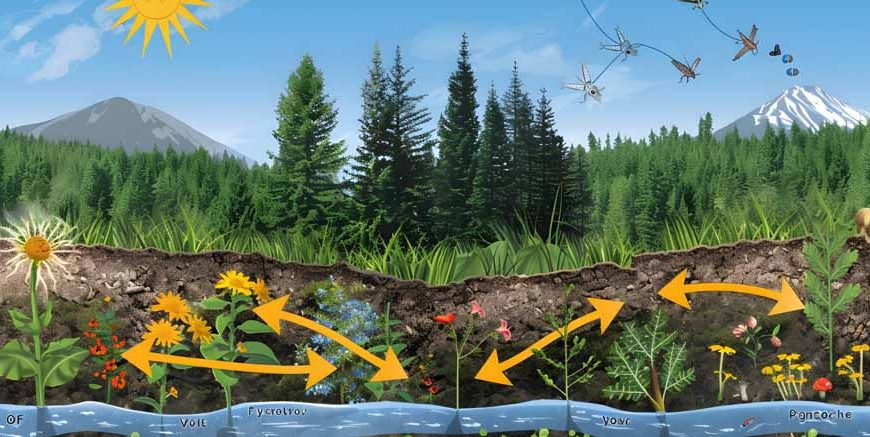
Now, how does this giant rock layer connect to plants? A clear lithosphere definition and examples will help us understand this teamwork. The lithosphere is entirely made of solid rock and minerals. But over millions of years, heavy rain, strong wind, and flowing river water break the very top rocks down into tiny little pieces. These tiny pieces mix with old, broken leaves to create soft soil.
Soil is the absolute most important example of the lithosphere interacting with nature. When we talk about lithosphere plants, we are talking about how deep tree roots grab onto this broken rock and soil to stand up straight. Without this solid rock breaking down into soft dirt, we would not have any green grass, tall pine trees, or sweet fruit bushes. The plants literally anchor themselves into the rock to survive.
Read More – Fun and Engaging Plant Life Cycle Activities for Kids
The Foundation of Life
If someone asks you, what is the importance of lithosphere, you can tell them it is the foundation of our entire lives.
First, it gives us a solid, dry place to live. Without it, we would have nowhere to build our homes, roads, or schools. Second, it gives us all our food. Every single fruit, vegetable, and grain we eat grows directly in the soil provided by this rocky layer. Third, it holds highly valuable treasures. All the useful metals we use to make cars, computers, and bicycles come directly from digging deep into these rocks. It acts as the Earth’s giant storehouse of supplies for humans to use.
The Living vs. The Non-Living
Another great science concept to learn is the difference between lithosphere and biosphere. This is very simple to remember if you just look at the two words.
The lithosphere is completely non-living. It is just the dirt, the heavy rocks, the sand, and the mountains. The biosphere is the living part of the Earth. It includes you, your pet dog, the birds flying in the sky, the fish in the sea, and every single green plant.
These two spheres work together perfectly as a team every single day. The non-living dirt (lithosphere) provides the essential minerals and the safe physical home for the living plants and animals (biosphere) to grow, eat, and survive.
Read More – Living vs Non-Living Things for Kids
Concluding
To sum everything up, the ground we walk on is a fascinating, highly active part of our planet. It is the hard, outer shell made of the crust and the top mantle. It naturally breaks down to make the healthy soil that feeds every single plant on Earth. By understanding this rocky layer, we learn exactly how our non-living planet fully supports all the living things around us.
As we step outside and look at a beautiful green garden today, it leaves us with a quiet thought. We usually only praise the bright green leaves and the colorful flower petals for their beauty. We rarely stop to thank the dark, hidden dirt holding them up. It reminds us that sometimes, the most important and strongest things in our lives are the ones working quietly behind the scenes, right beneath our feet.
To read more fun and educational articles, check out the EuroKids Blog, and visit our website for details on EuroKids Preschool Admission.
FAQs
What is the simplest way to define the lithosphere?
It is the solid, hard, outer layer of the Earth, entirely made of different rocks and dirt.
Do plants need the lithosphere to survive?
Yes. Plants absolutely need the top part of this layer, which is the soft soil, to anchor their roots and find important minerals to grow big and strong.
Is the ocean floor part of the lithosphere?
Absolutely. Even though it is completely covered by deep, salty water, the solid rock at the very bottom of the ocean is still a major part of this hard shell.
What is the main difference between the biosphere and the lithosphere?
The biosphere is made of all the living things like plants, animals, and humans. The lithosphere is made of non-living things like rocks, minerals, and sand.