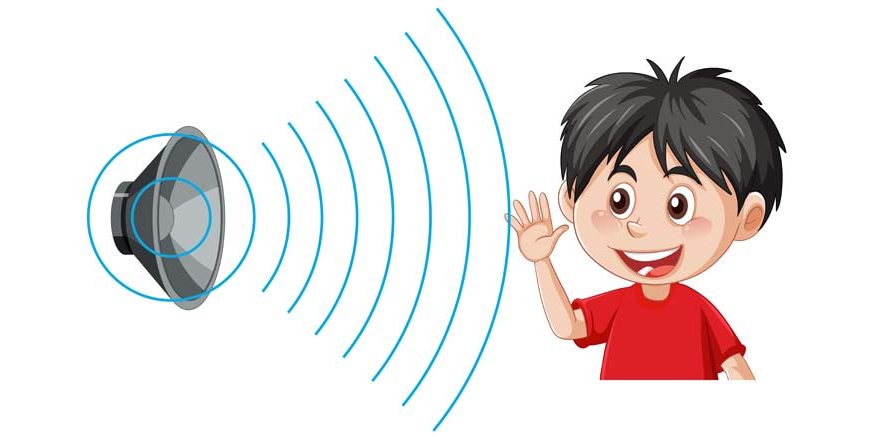
Have you ever yelled out into a giant, empty school gymnasium just to hear your own voice shout right back at you? Or maybe you stood at the edge of a massive, rocky canyon, yelled a loud “Hello!”, and waited patiently for the distant mountains to reply. It feels a lot like magic. It is almost as if an invisible copycat is hiding just out of sight, playfully repeating every single word you say.
But it isn’t magic. It is just energy on the move. That returning voice is a fantastic display of everyday science happening right in front of your ears. Let’s completely unpack this invisible copycat, learn exactly how it works, and see how animals and humans use it every day.
The Echo Meaning
If we leave all the complicated, heavy science textbooks for a second, the basic echo definition is actually incredibly simple to understand. It is just a reflection. Think about what happens when you throw a bouncy rubber ball as hard as you can against a solid brick wall.
The ball hits the hard surface, squishes for a millisecond, and snaps right back into your hands. Sound does the exact same thing! When someone asks you, “what is the meaning of echo?”, you can tell them it is simply a sound hitting a solid, hard barrier and bouncing straight back to where it came from.
What is Echo in Physics?
Alright, let’s put our imaginary lab coats on and look a little closer. If you ask a scientist, “what is echo in physics?”, they will start talking about traveling waves.
Sound travels through the air in invisible waves. When you clap your hands loudly, you are pushing the air. Those waves ripple outward in every direction, exactly like dropping a heavy pebble into a quiet puddle of water and watching the circles grow.
To properly define echo in physics, we have to look at the rules of the bounce. The sound wave has to travel outward, crash into a hard, smooth surface, like a towering rock wall, a cave, or a tiled bathroom floor, and reflect back. But there is a tricky catch. Your brain is a supercomputer. It processes noise incredibly fast. If a sound bounces back too quickly, your brain just blends it into your original shout. To actually hear a distinct, separate repeat of your voice, the sound needs a tiny delay. It has to take at least one-tenth of a second to bounce back to your ears. Because sound travels through the air very fast (about 343 meters every single second), you usually need to be standing at least 17 meters away from a wall to hear a perfect bounce!
Read More – Science of Sound Explained For Kids
Words in the Real World
We don’t just use this word when we are exploring dark caves or shouting at cliffs. The echoing meaning in English is often used to describe things that repeat in our daily lives.
For example, if your little brother completely copies your favorite outfit and repeats your jokes, you might say he is echoing your style. If a teacher shares a brilliant idea and the whole classroom agrees with it, their voices are echoing her thoughts. When you look up the echoes meaning in English in a dictionary, you will find it describes both the literal bouncing of noise and the figurative repeating of an idea, a feeling, or a memory.
Wild and Cool Real-Life Examples
The bouncing of sound isn’t just a fun trick to play in an empty room. It is a highly useful tool.
- Animal Superpowers: Bats hunt for tiny bugs at night. Because they cannot see well in the pitch dark, they squeak into the night air. When their high-pitched squeak bounces off a flying moth, the bat hears the returning sound and knows exactly where to swoop down for dinner! This amazing trick is called echolocation. Dolphins use a similar trick underwater to find fish.
- The Empty Room Effect: Have you ever moved into a brand-new house before the moving truck arrives? Without beds, couches, or thick rugs to absorb the noise, your footsteps sound incredibly loud. The sound waves just bounce wildly off the bare, hard walls.
- Ocean Explorers: Submarines use a special machine called sonar. The submarine sends a loud ‘ping’ through the deep, dark ocean water. By listening carefully to the sound that bounces back, sailors can map out the unseen ocean floor or safely avoid bumping into giant whales.
- Medical Marvels: Doctors use very quiet, high-frequency sound waves to see inside the human body safely. When a mother is expecting a baby, a doctor uses an ultrasound machine. It sends tiny sound waves into her tummy, and the bouncing echoes paint a clear picture of the baby on a computer screen!
Read More – Where Does Sound Come From?
Summary
Sound is an invisible, restless traveler. It bounces, reflects, and fills the empty spaces all around us. Whether it is a bat hunting in the pitch black, a deep-sea sailor navigating the dark ocean, or just you playfully shouting into a massive canyon, this bouncing energy proves that our world is constantly interacting with the energy we put out.
It makes you think, doesn’t it? Every single word we speak out loud literally ripples out into the universe, touches the objects around us, and sometimes, if the conditions are just right, it finds its way back home. Our voices have physical weight and travel far beyond our own lips. To read more fun and educational articles, check out the EuroKids Blog, and visit our website for details on EuroKids Preschool Admission.
FAQs
Why don’t I hear an echo in my cozy bedroom?
Soft materials are sound absorbers! Your fluffy mattress, big pillows, thick carpets, and window curtains soak up the sound waves before they ever get a chance to bounce back to your ears.
How far away does a wall need to be for this to work?
To hear a clean, completely separate repeat of your voice, the reflecting surface usually needs to be roughly 17 meters (about 56 feet) away from you.
Do all animals use bouncing sounds to see in the dark?
No! Only a few specific animals possess this incredible superpower. Bats, dolphins, and some species of whales are the most famous animals that use echolocation to safely navigate and hunt for food.