Hand your eight-year-old an ordinary English grammar reader on a hot Tuesday afternoon, and watch how fast their chin hits the desk. Most school primers bore children silly with dry sentences about boys fetching milk and trains leaving platforms on time. Teachers underline nouns with red ballpoint pens, assign ten spelling words for homework, and make everyone chant rules until English feels like cleaning up toys. Children never fall in love with words through mechanical drills. They need silly jokes, strange beasts, and rollicking rhythm. Pulling out an old pussy cat poem about two animals sailing away in a bright green dinghy changes the mood in seconds. This Victorian classic frees a child’s imagination, trains their ears to catch musical rhyme, and proves that reading can make you burst out laughing.
Lyrics Of The Owl And The Pussycat In English
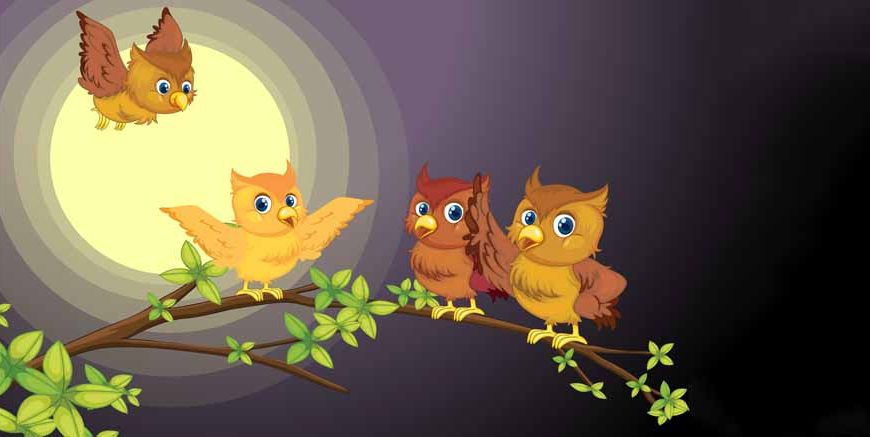
The Owl and the Pussy-cat went to sea
In a beautiful pea-green boat,
They took some honey, and plenty of money,
Wrapped up in a five-pound note.
The Owl looked up to the stars above,
And sang to a small guitar,
“O lovely Pussy! O Pussy, my love,
What a beautiful Pussy you are,
You are,
You are!
What a beautiful Pussy you are!”
Pussy said to the Owl, “You elegant fowl!
How charmingly sweet you sing!
O let us be married! too long we have tarried:
But what shall we do for a ring?”
They sailed away, for a year and a day,
To the land where the Bong-Tree grows
And there in a wood a Piggy-wig stood
With a ring at the end of his nose,
His nose,
His nose,
With a ring at the end of his nose.
“Dear Pig, are you willing to sell for one shilling
Your ring?” Said the Piggy, “I will.”
So they took it away, and were married next day
By the Turkey who lives on the hill.
They dined on mince, and slices of quince,
Which they ate with a runcible spoon;
And hand in hand, on the edge of the sand,
They danced by the light of the moon,
The moon,
The moon,
They danced by the light of the moon.
Read More – Ding Dong Bell Nursery Rhyme
Easy Ways to Play with the Poem at Home
Cardboard Box Theatre
Take an empty biscuit carton, cut it down into a curved boat shape, and paint the sides pea-green with watercolours. Let your child draw the cat, owl, pig, and turkey on scraps of drawing sheet, stick them to wooden ice-cream sticks, and put on a puppet show while you chant the lines together.
Tasting Real Honey on Toast
Spread a spoonful of sticky golden honey on a slice of hot toast for afternoon snack. Let your child taste the sweet treat while you read the opening stanza, anchoring the poem’s words to real smells and tastes.
Dancing to the Rhythm
Clear the slippers off the sitting room floor, play a slow acoustic guitar track on your phone, and hold hands to skip in a circle. Moving your feet to the four-beat tempo helps your child feel how poetic rhythm matches music.
How EuroKids Builds a Child’s Love for Story and Language
You can never make a young child love books by keeping them trapped on a hard wooden bench, copying sentences off a blackboard. Children pick up language with real joy when early educators build warm, friendly classrooms where funny tales, music, and role-play fill every single morning.
That hands-on approach runs through EuroKids preschools across the country. Rather than drilling toddlers with dry flashcards, teachers pull out colourful finger puppets, dress-up costumes, and giant picture books to bring nonsense tales alive. Classrooms feature low, sunny reading corners where children can pick up books on their own, look at pictures, and chat with classmates about silly animal adventures. Teachers lead energetic circle-time chats where little ones practice making bird calls, acting out character voices, and inventing their own rhyming couplets. By treating language as a joyful playground rather than a test, EuroKids helps young learners build clear diction, rich vocabularies, and the quiet confidence they need to read and speak with ease in primary school.
Read More – Short Animal Poems for Kids
Conclusion
Edward Lear’s bouncy nonsense rhyme reminds us that childhood learning should be full of laughter and wide-eyed play. When you encourage your child to enjoy an impossible tale about a cat and an owl dancing on the sand, you teach them that reading is an adventure without limits. A child who learns to play with sounds, giggle at funny words, and look past ordinary rules grows into a sharp, creative thinker who picks up books with eager curiosity.
To explore more practical parenting pieces and child development stories, browse through the EuroKids Blog, and visit your neighbourhood centre to speak with our staff about EuroKids Preschool Admission for your child today.
Frequently Asked Questions
Who wrote this famous nonsense poem?
The English poet and artist Edward Lear wrote it in 1867 to cheer up the unwell young daughter of a close friend.
What is a runcible spoon?
Lear invented the nonsense word runcible for this poem; people today picture it as a fork with curved, spoon-like prongs.
Why is this called a nonsense poem?
It uses strict rhyme and regular rhythm while telling an impossible, funny story about animals sailing, shopping, and marrying.
What did the owl and cat buy from the pig?
They bought the small silver ring from the end of the pig’s snout for one shilling to use as a wedding band.