When August comes around, school notebooks often get packed away for a few hours while kids prepare for national day events. Then comes the inevitable afternoon when your eight-year-old walks into the kitchen holding a handwritten slip from school. Their teacher assigned them a brief talk for the morning assembly. When you open your laptop to find a Quit India movement speech in English, most websites show heavy, formal essays full of political terms and long dates. That kind of text leaves a primary school child feeling stressed and confused.
No parent wants their child standing on a stage simply repeating memorised lines like a robot. Delivering a short talk ought to build clear speaking habits, natural confidence, and a real feeling for history. This guide breaks down the event into simple stories, gives you short ready-to-use speech options, and shares straightforward home practice ideas. You will find everything you need to help your child give a clear speech on Quit India Movement Day without tears or last-minute panic.
Historical Context: Understanding 8 August 1942
Before sitting down to run through speech lines, spend ten minutes chatting with your child about what actually happened during that rainy month in 1942. Children grasp historical events much better when you explain them like a story rather than reading from a textbook chapter.
Back in 1942, British officers had been ruling Indian towns and countryside for well over two hundred years. Local families faced heavy taxes, strict rules, and very little control over their own lives. World War II was going on across Europe and Asia, and the colonial government sent Indian soldiers to fight overseas without asking Indian leaders. People everywhere felt exhausted, poor, and determined to manage their own nation.
On 8 August 1942, leaders from across the country met at Gowalia Tank Maidan in Mumbai, which we now call August Kranti Maidan. Mahatma Gandhi stood up in front of thousands of workers, mothers, and young people. He asked British rulers to leave India completely and gave the crowd two famous words: “Do or Die” (Karo ya Maro). He meant that every Indian should work peacefully for full freedom, or die trying, rather than living under foreign rule any longer.
Early the next morning, British police arrested Gandhi, Jawaharlal Nehru, and almost every major leader. The government thought those arrests would end the protests instantly. Instead, ordinary people stepped up. School children marched through street markets, women held quiet rallies, and factory workers stopped their machines. Aruna Asaf Ali bravely hoisted the Indian flag at Gowalia Tank Maidan while police tried to disperse the crowd. That massive effort showed the world that Indians were ready to govern themselves.
Read More – Interesting Facts About India
Short Quit India Movement Speech
“Respected Principal, dear teachers, and my friends. Good morning to you all!
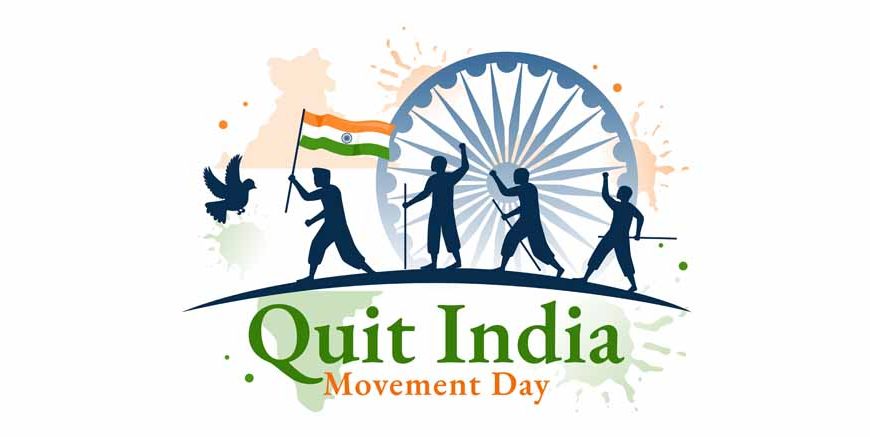
Today, we gather here to remember Quit India Movement Day. On 8 August 1942, Mahatma Gandhi asked foreign rulers to leave our country peacefully. He gave us the famous words: ‘Do or Die’.
Thousands of brave men, women, and young kids joined hands to win our freedom through peace and truth. Thanks to their hard work, we live in a free, happy country today.
Let us promise to love our nation, respect our flag, and help those around us. Thank you! Jai Hind, Bharat Mata Ki Jai!”
Quit India Movement Speech for Primary School Students
“Respected Principal, dedicated teachers, and my dear friends. A warm good morning to everyone present.
I feel proud to stand here today to deliver my Quit India Movement speech. Every year on 8 August, our country marks Quit India Movement Day to remember the bravery of our freedom fighters.
In August 1942, Mahatma Gandhi started this major movement from Mumbai. He asked the British rulers to leave India immediately and gave everyone the inspiring motto: ‘Do or Die’. That message spread quickly into every city, town, and small village across our country.
When police arrested senior leaders overnight, brave young people and women took charge of the peaceful marches. Heroes like Aruna Asaf Ali raised our national flag despite great danger. Students left their classrooms to join street processions, showing great unity.
This movement proved that when regular people stand together for fairness, no power can stop them. As students of modern India, we must honour their sacrifices by studying well, keeping our streets clean, treating everyone with kindness, and acting as responsible citizens every day.
Thank you for listening so carefully. Jai Hind!”
Read More – Short and Easy Independence Day Speech for Kids
How EuroKids Nurtures Young Public Speakers
Building clear speech habits, historical curiosity, and emotional confidence requires a patient, encouraging early learning setup. EuroKids helps young learners develop public speaking skills, self-expression, and cultural respect through a thoughtfully designed early childhood curriculum.
Through daily circle time chats, stage activities, role-play exercises, and festive events, EuroKids teachers support children as they learn to speak up clearly and share thoughts without fear. This child-first learning method ensures early learners develop natural stage confidence without feeling overwhelmed or stressed.
Conclusion
Helping your child prepare a Quit India Movement speech offers far more than a memorable morning assembly presentation. It gives you a great opportunity to connect young minds with the real courage, sacrifice, and values that built modern India. When you explain historical events through simple stories, run through lines patiently at home, and link historical values to everyday good habits, your child steps onto the stage with genuine understanding and steady pride.
Discover more practical learning guides, speech templates, and early education ideas on the EuroKids Blog, and explore a supportive foundation for your child’s growth by visiting EuroKids Preschool Admission today.
Frequently Asked Questions
1. What was the main slogan of the Quit India Movement?
Mahatma Gandhi gave the famous slogan “Do or Die” (Karo ya Maro) during his speech on 8 August 1942.
2. Why do schools celebrate 8 August as Quit India Movement Day?
On 8 August 1942, national leaders passed the Quit India Resolution in Mumbai, starting a countrywide peaceful push for independence.
3. How can a young child learn a speech quickly without getting stressed?
Break the text into two short lines at a time, practice out loud twice a day, and use simple hand gestures to help recall the words.
4. Who raised the national flag after top leaders were arrested in 1942?
Aruna Asaf Ali bravely raised the Indian tricolour flag at Gowalia Tank Maidan in Mumbai on 9 August 1942 after police arrested senior leaders.