Puzzles are more than just a fun way for children to pass the time. They are powerful tools for learning and development. In India, where parents are increasingly looking for ways to boost their child’s cognitive skills, puzzles for kids have become an essential part of early education.
This article explores why children should be encouraged to play with puzzles, the types of puzzles suitable for different age groups, and the cognitive, emotional, and social benefits they bring.
What Are Puzzles?
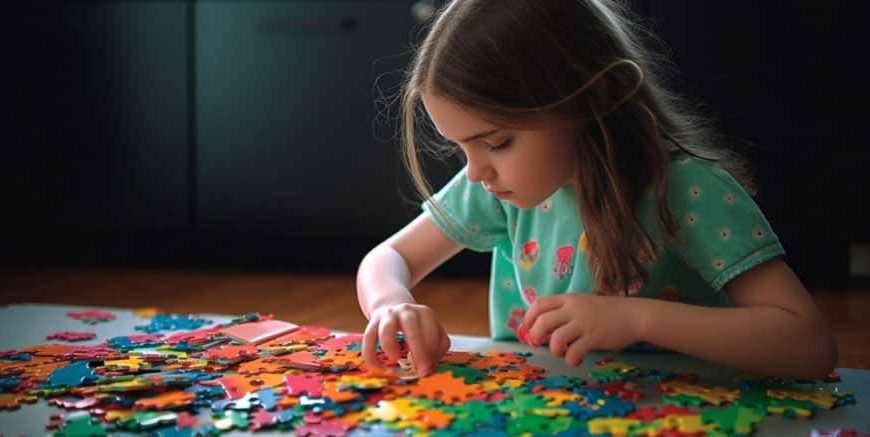
Puzzles for kids are games or activities that challenge a child to think critically, solve problems, and match patterns. They come in various forms, including jigsaw puzzles, picture puzzles, word puzzles, number puzzles, and logical puzzles. Puzzles can be physical, like a wooden jigsaw, or digital, like educational apps used in many Indian households.
Puzzle meaning: A puzzle is a problem designed to test ingenuity or knowledge.
Types of Puzzles for Children
Understanding the types of puzzles can help parents choose the right puzzle for their child.
1. Jigsaw Puzzles
- Consists of pieces that fit together to form a complete picture.
- Suitable for ages 3 and above.
- Helps in hand-eye coordination and spatial awareness.
2. Word Puzzles
- Include crosswords, word searches, and scrambled words.
- Suitable for ages 5 and above.
- Boosts vocabulary, spelling, and reading skills.
3. Number Puzzles
- Include Sudoku, number sequences, and math puzzles.
- Suitable for ages 6 and above.
- Enhances numerical ability and logical thinking.
4. Logical Puzzles
- Include pattern recognition, mazes, and riddles.
- Suitable for ages 7 and above.
- Improves problem-solving and analytical skills.
Read More – ‘What Am I?’ Riddles For Kids With Answers
5. Educational Apps and Digital Puzzles
- Many Indian edtech platforms provide puzzles for kids to learn math, English, and general knowledge.
- Suitable for ages 4 and above with proper screen time limits.
Cognitive Benefits of Playing Puzzles
Playing puzzles helps children develop key cognitive skills essential for learning.
1. Improves Memory
When children solve a puzzle, they need to remember shapes, colours, and patterns, enhancing their visual and working memory.
2. Enhances Problem-Solving Skills
Puzzles require children to analyse and strategise, which strengthens critical thinking skills.
3. Boosts Attention and Concentration
Completing a puzzle requires focus for extended periods, improving attention span and patience.
4. Develops Spatial Awareness
For jigsaw puzzles and shape-based puzzles, children learn how objects fit together, enhancing spatial reasoning, a skill crucial in math and engineering.
5. Encourages Logical Thinking
Logical puzzles teach children to identify patterns and make predictions, which is useful in subjects like mathematics and science.
Read More – Mathematical Puzzles & Brain Teasers for Kids
Emotional and Social Benefits
Beyond cognition, puzzles support emotional growth and the development of social skills.
1. Builds Patience and Perseverance
Not all puzzles are easy. Children learn perseverance, patience, and resilience when they solve complex puzzles.
2. Boosts Confidence
Completing a puzzle gives children a sense of achievement, boosting self-esteem and confidence.
3. Encourages Family Bonding
In Indian households, parents can solve puzzles with children, creating quality family time and bonding.
4. Promotes Teamwork
Group puzzles teach children collaboration and communication skills.
Why Puzzles Are Essential in Early Education
In India, many schools are integrating puzzles and brain games into their early education curriculum. Here’s why:
1. Prepares Children for Academic Success
Puzzles help children develop early skills in math, reading, and problem-solving.
2. Enhances Creativity
While solving puzzles, children often try multiple approaches, which stimulates creative thinking.
3. Improves Focus in Class
Children who play puzzles regularly are better at focusing on tasks in school.
4. Encourages Independent Learning
Puzzles allow children to explore solutions independently, fostering self-directed learning.
Read More – Crossword Puzzles for Kids: A Guide to Educational Fun
Fun Puzzle Activities at Home
Parents can make puzzle time engaging with easy activities at home:
1. DIY Puzzles
- Use cardboard to make picture puzzles.
- Let children draw and cut the puzzle pieces.
2. Online Educational Puzzles
- Platforms like BYJU’s, Vedantu, and SplashLearn offer interactive puzzles for kids.
3. Nature Puzzles
- Collect leaves, stones, and sticks and create pattern puzzles.
- Helps kids connect with Indian nature and the environment.
4. Story-Based Puzzles
- Use storybooks to create puzzles where kids match characters or events.
5. Family Puzzle Nights
- Dedicate one evening a week to puzzle-solving as a family activity.
Choosing the Right Puzzle for Your Child
- Age-appropriate: Ensure the puzzle matches your child’s developmental stage.
- Difficulty level: Start with easy puzzles and gradually increase complexity.
- Educational value: Choose puzzles that enhance learning skills such as math, reading, and logical reasoning.
- Engagement factor: Select puzzles with colours, themes, and characters that children enjoy.
Fun Facts About Puzzles
- The largest jigsaw puzzle in India had over 40,000 pieces!
- Puzzles can reduce stress and anxiety in children and adults.
- Sudoku, a type of number puzzle, is popular in Indian newspapers like The Times of India.
How EuroKids Builds Strong EVS Foundations
When Environmental Studies (EVS) is introduced through observation, storytelling, nature walks, and hands-on exploration, young learners begin to understand their surroundings in a meaningful and lasting way. Instead of memorising facts about plants, animals, or seasons, children learn by experiencing and questioning the world around them. This is why structured early education programs focus on experiential and inquiry-based learning rather than rote memorisation.
At EuroKids, foundational EVS concepts are nurtured through the HEUREKA – Visible Thinking Curriculum. This approach encourages children to explore themes such as “My Family,” “My Community,” “Plants and Animals,” “Seasons and Weather,” and “Good Habits” through interactive discussions, thematic projects, role play, outdoor exploration, and guided observation.
The Visible Thinking framework helps children observe carefully, think deeply, and express their ideas confidently. Through activities like nature-based learning, environmental awareness projects, sensory exploration, and group conversations, children develop curiosity about how things grow, how communities function, and how they can care for the environment.
With a child-centric and play-based methodology refined over 20+ years and implemented across 1600+ preschools, EuroKids focuses on building awareness, responsibility, and curiosity first, allowing knowledge, empathy, and critical thinking skills to develop naturally over time.
Tips to Make Puzzle Time Effective
- Set a regular schedule: Consistency improves skills over time.
- Mix puzzle types: Include word, number, and picture puzzles to develop a range of skills.
- Reward achievements: Praise children for effort, not just completion.
- Encourage thinking aloud: let kids explain their reasoning as they solve puzzles.
- Limit screen time: For digital puzzles, balance screen and physical puzzle time.
Conclusion
Puzzles are an essential tool for child development. In India, where parents balance education, technology, and family time, incorporating puzzles for kids can boost cognitive skills, enhance creativity, and strengthen family bonds. From memory improvement to problem-solving skills, the benefits of puzzles go beyond entertainment; they are a gateway to learning and holistic growth.
Encouraging children to play with puzzles at home or at school helps them grow into confident, analytical, and creative individuals, ready to tackle life’s challenges.
To explore more learning ideas, simple explanations, and early childhood resources, parents
can visit the EuroKids Blog. Those who wish to understand the preschool journey better or
explore enrolment options can find complete information on the EuroKids Preschool Admission
Page, where learning is designed to be joyful, engaging, and child-friendly.