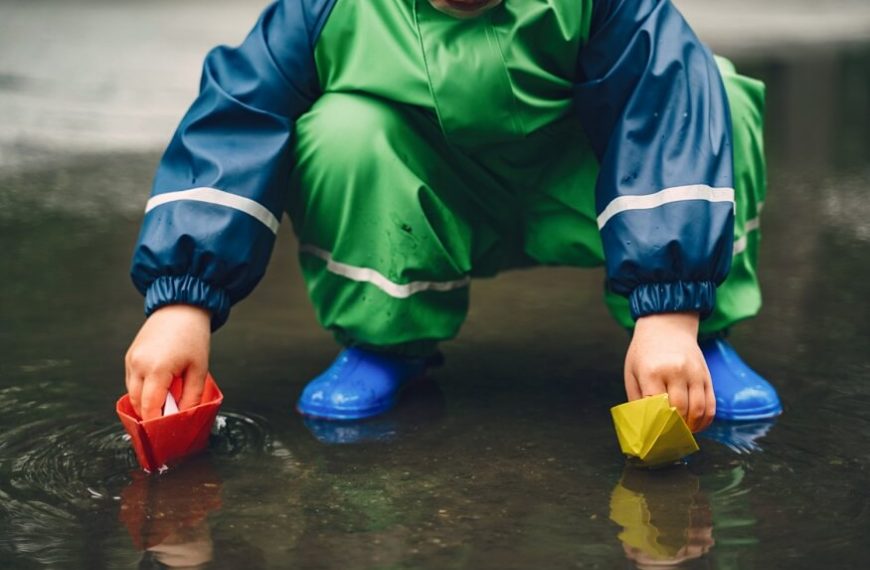
Rainy days can feel disappointing for preschoolers who love outdoor play. But with a little creativity, these gloomy days can turn into exciting opportunities for fun, learning, and imagination. Indoor activities not only keep children engaged but also help them develop important skills like creativity, coordination, problem-solving, and communication. In this blog, we explore a variety of rainy day activities for preschoolers that are entertaining, educational, and easy to organise at home or in classrooms.
The kids will be entertained while also learning and being creative thanks to these games and activities.
Creative Indoor Activities for Rainy Days
1. Rainy Day Sensory Bin
A sensory bin is one of the finest ways to keep preschoolers entertained on a rainy day. Make a sensory bin with objects that represent the rainy season. For added fun, use items like cotton balls for clouds, blue-tinted water for rain, and tiny umbrellas. Encourage the kids to use their imaginations and explore the textures in the sensory bin. Their senses are stimulated, and this activity fosters cognitive growth.
Read More – Tips for Plant Care in Rainy Season
2. Indoor Obstacle Course
Children in preschool have a lot of energy, and an indoor obstacle course can help them use that energy productively. Create a course of obstacles using cushions, pillows, and other secure things. Children can move throughout the course by climbing over cushions and under tables. This exercise encourages coordination, balance, and physical growth. Encourage them to take the course more than once and to push themselves to get better at it.
3. Raindrop Art
Preschoolers love doing art projects, and rainy days are the ideal occasion to make raindrop paintings. Give kids some watercolour paints and a white piece of paper or canvas. Request that they make raindrop-inspired art. Encourage them to try out various brushstrokes and colour schemes. Both creativity and fine motor skills are stimulated by this practice. To promote their creativity and increase their self-esteem, proudly display their artwork.
4. Indoor Camping
Create a cosy tent in a corner of the classroom. Bring in books about camping and set up tents and sleeping bags. Encourage kids to play pretend, tell stories, and sing songs for the campfire. This practice encourages the growth of language and imagination. Give out flashlights to create the excitement of a nocturnal camping experience. Encourage kids to take turns being the “campfire leader” and telling their most memorable camping tales.
5. Puddle Jumping
Rainy days are ideal for getting outside and enjoying some puddle jumping. Put on your rain gear and go outside for safe puddle-jumping fun on a wet day. While highlighting safety and the need to stay dry, allow the kids to experiment with the feeling of splashing in puddles. Encourage children to take note of the various puddle sizes and forms. After that, give them warm drinks and towels to assist them in drying off so they may carry on with their indoor activities.
Read More – Indoor Plants to Brighten Up the Rainy Season
6. DIY Rainstick
Preschoolers can learn via hands-on experience and creativity by participating in DIY projects. With the use of recyclable items like paper towel rolls, rice, and aluminium foil, teach the kids how to make their own rainsticks. This activity introduces the ideas of sound and rhythm while improving sensory awareness. Encourage the kids to add colours and ornaments to their rainsticks to make them unique. Have a collective rainstick performance where kids take turns making rain sounds after crafting the rainsticks.
7. Storytime and Puppet Show
Preschoolers love storytime, and a rainy day calls for a particularly enjoyable session. Bring the kids together for a relaxing storytime. Pick novels with rain-related themes or recount well-known rain-related tales with puppets. Encourage the kids to take part by posing questions and having them act out certain scenes from the story. Invite the kids to make their own puppets and perform a puppet show after the narrative. Through this practice, they build their language skills and foster their creativity.
8. Dance Party
Sometimes dancing and music are all you need to cheer yourself up on a gloomy day. Increase the volume and hold a dance party inside. Encourage the kids to dance as a way to express themselves and move their bodies freely. Physical fitness, coordination, and self-expression are all enhanced by this practice. To add diversity, make a playlist that includes both lively and mellow tunes. Participate in the dancing with the kids to make it a fun and welcoming experience.
Read More – Best Rain Gear for Kids
9. Indoor Treasure Hunt
Treasure hunts are fun and can hold a preschooler’s attention for several hours. By scattering little items or photos throughout the classroom, you can create an indoor treasure hunt. Give the kids hints and encourage teamwork as they search for the hidden goodies. Teamwork and problem-solving abilities are enhanced by this practice. Depending on the kids’ ages and skills, adjust the challenge level. To keep kids motivated, give out token incentives or stickers for each item discovered.
10. Science Experiments with Water
Rainy days are a great time to investigate many water-related scientific ideas. Engage the kids in easy water-based science experiments. Use ice cubes, boiling water, and a glass jar, for instance, to show how rain clouds develop. A fun and approachable way to explain scientific ideas is through this practical project. During the experiment, encourage the kids to observe and ask questions. Give children the chance to investigate the various characteristics of water, such as freezing and evaporation.
How EuroKids Encourages Learning Through Play
At EuroKids, rainy days are seen as opportunities for creative learning rather than limitations. The curriculum is designed to integrate play-based activities that promote holistic development in children. Through interactive games, sensory play, art projects, and storytelling sessions, EuroKids ensures that children remain engaged, curious, and enthusiastic about learning, regardless of the weather. By combining fun with education, EuroKids helps preschoolers develop essential life skills while nurturing their imagination and confidence.
Conclusion
Rainy days do not have to be dull or restrictive for preschoolers. With the right activities, they can become exciting moments filled with creativity, exploration, and learning. From sensory play and art to science experiments and pretend adventures, indoor activities provide endless opportunities for children to grow and thrive.
By encouraging playful learning and meaningful engagement, parents and educators can transform rainy days into memorable experiences that support a child’s overall development. With innovative approaches like those used at EuroKids, children can continue learning joyfully, even when the weather keeps them indoors. Parents exploring preschool admission options can also discover more early learning resources by visiting the EuroKids Blog.
FAQs:
1. Why are indoor activities important for preschoolers on rainy days?
Indoor activities keep children active, stimulate creativity, and support physical, cognitive, and emotional development when outdoor play is not possible.
2. What are the best rainy day activities for preschoolers?
Some of the best activities include sensory bins, art projects, indoor obstacle courses, storytelling, dance parties, and simple science experiments.
3. How do rainy day activities help in child development?
These activities improve motor skills, creativity, problem-solving abilities, language skills, and social interaction among children.
4. Can parents easily organise these activities at home?
Yes, most rainy day activities use simple household items and require minimal preparation, making them easy for parents to organise.
5. How does play-based learning benefit preschoolers?
Play-based learning makes education enjoyable, enhances curiosity, and helps children develop essential skills naturally through fun experiences.