Learning antonyms is an important step in building a strong English vocabulary for young learners. Opposites help children understand meanings more clearly by showing how words can differ from one another. These opposite words are also called antonyms in English grammar. When children learn antonyms, they improve reading, writing, and speaking skills at the same time. Understanding antonyms in English also helps students form better sentences and compare ideas easily. In this blog, we will explore opposite words, learn what is synonyms and antonyms, and go through an easy opposite words in English 100+ list.
What are Synonyms and Antonyms?
Children often learn these two together. Synonyms are words with similar meanings, whereas Antonyms are words with opposite meanings.
Examples of synonyms are-
- Big — Large
- Happy — Joyful
Examples of Antonyms are-
- Big — Small
- Happy — Sad
10 Opposite Words
- Big — Small
- Tall — Short
- Hot — Cold
- Day — Night
- Up — Down
- In — Out
- Fast — Slow
- Happy — Sad
- Open — Close
- Near — Far
100+ Opposite Words in English
- Absence — Presence
- Accept — Refuse
- Add — Subtract
- Beautiful — Ugly
- Begin — End
- Big — Small
- Brave — Timid
- Accept — Reject
- Above — Below
- Join — Separate
- Rest — Work
- Present — Absent
- Healthy — Sick
- Start — Stop
- Bored — Amused
- Above — Under
- Alive — Dead
- Arrive — Leave
- Awake — Asleep
- Before — After
- Best — Worst
- Bitter — Sweet
- Bold — Timid
- Borrow — Return
- Bright — Dim
- Calm — Excited
- Catch — Throw
- Closed — Open
- Cool — Warm
- Dark — Bright
- Day — Night
- Empty — Full
- Enter — Exit
- Finish — Begin
- Forward — Backward
- Found — Lost
- Fresh — Stale
- Gentle — Rough
- Give — Receive
- Glad — Sorry
- Grow — Shrink
- Here — There
- Honest — Dishonest
- Include — Exclude
- Junior — Senior
- Kind — Cruel
- Laugh — Cry
- Lead — Follow
- Left — Right
- Loose — Tight
- Messy — Neat
- Natural — Artificial
- Noisy — Silent
- North — South
- On — Off
- Out — In
- Push — Pull
- Question — Answer
- Rich — Poor
- Rise — Fall
- Same — Different
- Save — Spend
- Sit — Stand
- Smile — Frown
- Start — Finish
- Sunny — Cloudy
- Teach — Learn
- Thick — Thin
- True — False
- Up — Down
- Victory — Loss
- Visible — Hidden
- Young — Old
- Brave — Coward
- Broad — Narrow
- Busy — Idle
- Careful — Careless
- Dark — Light
- Dead — Alive
- Deep — Shallow
- Defend — Attack
- Destroy — Build
- Divide — Multiply
- East — West
- Exclude — Include
- Fix — Break
- Give — Take
- Go — Come
- Hard — Soft
- High — Low
- Increase — Decrease
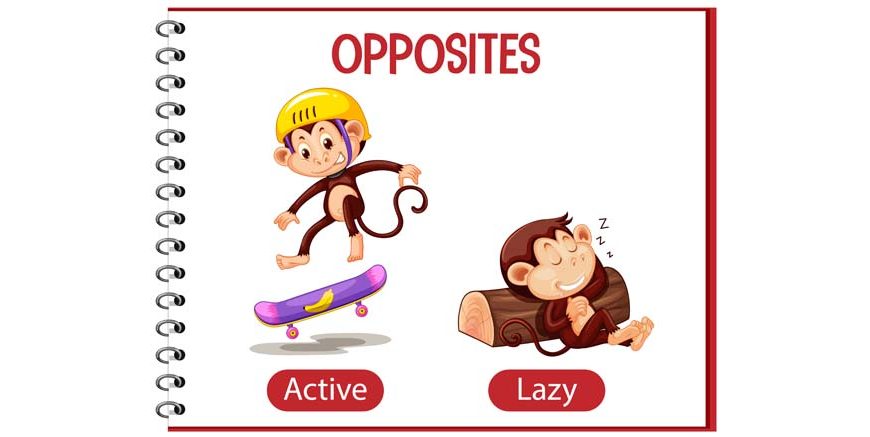
- Lazy — Active
- Left — Right
- Loud — Quiet
- Near — Far
- Old — Young
- Peace — War
- Poor — Rich
- Present — Past
- Rude — Polite
- Sadness — Happiness
- Safe — Dangerous
- Thick — Thin
- Top — Bottom
- Light — Dark
- Full — Empty
- Loud — Quiet
- Tall — Short
- Strong — Weak
- Near — Far
- Hard — Soft
- Buy — Sell
- Give — Take
- Come — Go
- Warm — Cold
- Wet — Dry
- Victory — Defeat
- Useful — Useless
Read More – Opposite Words for Class 1 Kids
Using Opposite Words in Sentences
Children can learn antonyms better when they use them in sentences. Here are a few examples:
- The big elephant is not small.
- The water is cold, not hot.
- The boy is fast, but the turtle is slow.
- The room is clean, not dirty.
- The sky is dark at night and bright in the day.
How To Teach Opposite Words To Children
Teaching opposite words to children becomes much easier when learning is visual, active, and playful. Some ways are as follows:
- Instead of only asking children to memorise antonyms, parents and teachers should show them real examples. Practical demonstrations help children understand the meaning faster and remember it longer. For example, to explain “together” and “separate,” place two objects side by side and then move them apart. This kind of sensory and visual learning is very effective for opposite words for Class 2 learners.
- Flashcards are one of the best tools for teaching antonyms in English. You can show one word on a card and its opposite on another. Picture-based flashcards work even better because children connect images with meanings. Visual comparison cards like day–night, tall–short, or happy–sad make learning fun and memorable.
- Collage activities are also very useful. Parents and teachers can use newspapers, magazines, and catalog pictures to create opposite pairs. For example, paste a daytime picture on one side and a nighttime picture on the other. You can also create boards with pairs like clean/dirty or full/empty. Children enjoy cutting and pasting, so this becomes both a craft and a vocabulary lesson.
Read More – Simple Opposite Words for Kids
Facts About Opposite Words for Kids
Exploring antonyms can be a fun learning adventure for young students. Here are some interesting and easy facts about opposite words that make vocabulary learning exciting:
1. Opposite Words Can Be Different Parts of Speech
Antonyms can be adjectives, verbs, nouns, or adverbs. Examples:
- Happy — Sad (adjectives)
- Come — Go (verbs)
2. Some Antonyms Are Made Using Prefixes
We can form opposite words by adding prefixes like un-, dis-, in-, and im-.
Examples:
- Happy — Unhappy
- Agree — Disagree
- Correct — Incorrect
3. Opposites Exist in Almost Every Language
The idea of opposite meanings is found in most languages around the world. Learning opposites in English helps children understand the same concept in other languages, too.
4. Some Opposites Show Position
Examples include pairs like the top opposite word (bottom) and the deep opposite word (shallow). These help children describe place and level.
5. Some Opposites Show Personality Traits
Even descriptive words have antonyms. For example, the audacious antonym is timid, meaning bold versus shy.
Why Learning Opposite Words Is Important
For example, knowing pairs like hot–cold or big–small helps children explain and compare things accurately, rather than just saying “not big” or “not hot”. Learning antonyms or opposite words helps children:
- Improve vocabulary quickly
- Understand word meanings clearly
- Speak and write better sentences
- Compare things easily
- Describe differences in daily life
Read More – Describing Words for Kids with Meaning
The Role EuroKids Plays in Teaching Opposite Words
EuroKids helps children learn opposite words in English through engaging classroom activities, story sessions, and interactive vocabulary games. Teachers introduce antonyms using visual aids and practice worksheets that make learning fun and memorable. Students are encouraged to use opposite pairs in simple sentences and short conversations, strengthening both their speaking and writing skills. By connecting word learning with fun activities, EuroKids supports children in building a strong foundation in the English language that goes beyond memorisation.
Conclusion
Opposite words are a fun and powerful way for children to build a strong English vocabulary. Understanding antonyms helps young learners express thoughts clearly, compare ideas, and write descriptive sentences. Whether it is a simple pair like big–small or more advanced pairs, learning these word pairs lays a strong foundation for better English communication. Practising lists, sentences, and activities daily helps children remember and use opposite words confidently. Enjoy exploring antonyms and watch your vocabulary grow every day.
To explore more learning ideas, simple explanations, and early childhood resources, parents can visit the EuroKids Blog. Those who wish to understand the preschool journey better or explore enrolment options can find complete information on the EuroKids Preschool Admission Page, where learning is designed to be joyful, engaging, and child-friendly.
FAQs:
1. What is an antonym?
An antonym is a word with the opposite meaning of another word.
2. Why should kids learn opposite words?
It helps them understand meanings better and build vocabulary.
3. What is the deep opposite word?
The deep opposite word is shallow.
4. What is the top opposite word?
The top opposite word is bottom.
5. What is the audacious antonym?
The antonym of audacious is timid or shy.