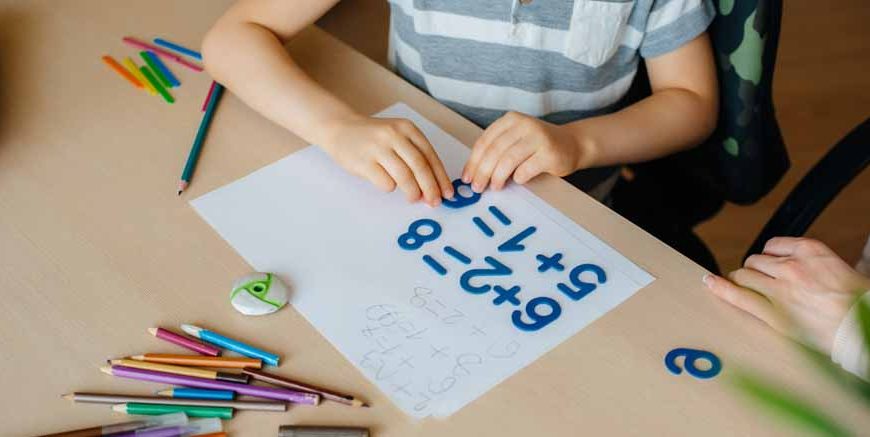
Picture a seven-year-old standing in the biscuit aisle of a local supermarket. They have a shiny ten-rupee coin in their pocket. They desperately want to buy two small packets of sweets that cost four rupees each. Do they pull out a piece of scrap paper and a sharp pencil? Absolutely not. They do a lightning-fast calculation right there in their head. That tiny, invisible gears-turning moment is exactly what we are focusing on today.
Learning to juggle numbers without heavily relying on a plastic calculator or physical paper is a massive developmental leap for young kids. It stops numbers from feeling like an abstract, terrifying school chore and turns them into a highly practical, everyday toolkit. When children can manipulate numbers freely in their minds, they gain a massive surge of academic confidence. Let us break down exactly how you can nurture this brilliant skill at home without making it feel like a boring, stressful homework session.
Navigating mental maths for class 2 CBSE
When a child officially reaches the second grade, the academic expectations shift quite a bit. If you look closely at the framework for mental maths for class 2 CBSE, you will quickly notice that it moves aggressively away from simply counting on fingers. The national curriculum desperately wants kids to start seeing the hidden patterns in mathematics.
The main goal is for them to understand that numbers can easily be broken apart and glued back together. Instead of just memorising times tables through dull, robotic repetition, the focus shifts entirely to true number fluency. When a child successfully masters this early on, they completely stop panicking during formal exams. They learn to trust their own brain’s processing power. This vital early confidence heavily mirrors the hands-on, investigative approach we proudly use within the Heureka Curriculum, where children are actively encouraged to play with tricky concepts and investigate solutions rather than just staring blankly at a strict teacher on a chalkboard.
Read More – Mathematical Puzzles and Brain Teasers for Kids
Clever tricks to tackle mental sums for class 2
You simply cannot just tell a child to calculate faster and expect it to magically happen. You have to hand them the right mental shortcuts. Tackling mental sums for class 2 becomes completely stress-free when kids learn a few sneaky, clever tricks. Here is a highly practical list of strategies you can easily teach them right now:
- Finding the friendly ten: Teach them that the number ten is their absolute best friend in the entire world. If they need to add 8 and 5, show them how to steal 2 from the 5 to make a neat, tidy 10, leaving a 3 behind. Ten plus three is magically 13. It is a game-changer.
- The magical doubling trick: Kids usually find it incredibly easy to remember their doubles (like 4+4 or 5+5). If they face a slightly trickier sum like 5+6, tell them to just double the 5 to get 10, and simply add one extra.
- The sneaky nine rule: Adding nine often confuses young children. Teach them a quick cheat code: to add 9 to any number, just add 10 instead, and then take 1 away. So, for 15 + 9, they do 15 + 10 to get 25, minus 1 makes 24.
- Breaking it all down: For slightly bigger numbers, chop them into tens and units. To add 24 and 12, add the 20 and 10 first to get 30, then add the 4 and 2 to get 6. Combine them to find 36. It completely removes the sheer panic of looking at double-digit numbers.
Read More – Best Visual Memory Games for Kids
Building engaging mental maths questions for class 2
Boring, black-and-white worksheets usually kill a child’s natural enthusiasm instantly. To keep their brain actively engaged, you need to tie the dry numbers to their actual, colourful reality. Good mental maths questions for class 2 should sound exactly like a mini-adventure.
For example, instead of writing a boring “15 – 7 = ?” on a whiteboard, you could ask: “You have fifteen bright red apples in a massive basket, and a hungry brown horse suddenly sneaks up and eats seven of them. How many apples are left for us to bake a pie?”
Or try something like this: “If a giant spaceship needs twenty shiny silver buttons to launch into space, but the astronaut only has twelve, how many more buttons do we desperately need to find before we can fly to the moon?”
When you wrap a boring calculation inside a colourful, highly descriptive story, the child completely stops seeing it as a scary maths problem. They just see a fun, imaginary puzzle that desperately needs solving.
Hosting a brilliant mental maths quiz for class 2
Kids absolutely love a bit of friendly, fast-paced competition. Setting up a casual mental maths quiz for class 2 on a lazy Sunday afternoon is a fantastic way to test their speed without applying any heavy school pressure. You do not need a fancy buzzer or a loud ticking clock.
Just grab a bowl of their absolute favourite snacks and declare a surprise pop quiz in the living room. Keep the energy extremely high and the questions snappy. “What is double seven?” “Take four away from twenty!” “Add ten to thirty-five!” If they get the answer right instantly, throw them a piece of popcorn. If they hesitate or stumble, do not scold them. Gently guide them back to the clever shortcuts you practised earlier in the week. Keeping the entire vibe playful ensures they strongly associate fast calculations with joy and achievement, rather than strict, terrifying schoolroom discipline.
Read More – Ways To Inspire Your Child To Engage In Learning
Conclusion
It is a deeply fascinating reality that the exact way a seven-year-old learns to successfully manipulate basic numbers today will directly dictate how they handle complex logic, personal finances, and massive problem-solving in their future adult life. Mathematics is certainly not just about passing a Friday morning spelling and numbers test; it is the fundamental, hidden language of the entire universe. When we remove the heavy pencils, ditch the stressful worksheets, and instead actively teach children to play freely with numbers vividly in their own minds, we give them an incredibly powerful gift. We teach them to be fearless, independent thinkers. They quickly learn that they already possess the absolute most powerful calculator in the world right inside their own head. To explore more brilliant parenting strategies and help actively shape your child’s vibrant academic path, dive straight into the EuroKids Blog and easily secure their brilliant educational journey today with EuroKids Preschool Admission.
FAQs
Why is finger counting heavily discouraged at this specific age?
Relying heavily on physical fingers slows a child down massively as numbers inevitably get larger. Encouraging mental shortcuts pushes their growing brain to recognise mathematical patterns automatically, building long-term speed.
How much time should we spend practicing these quick skills daily?
Keep it incredibly brief and highly casual. Ten to fifteen minutes of snappy, verbal number games during a car ride or while walking to the local park is more than enough to build lasting fluency.
What should I do if my child gets highly frustrated during a home quiz?
Stop the game immediately. The absolute worst thing you can do is attach deep anxiety to maths. Take a long break, lower the difficulty level to rebuild their shattered confidence, and try again on a completely different day with a much lighter, sillier tone.