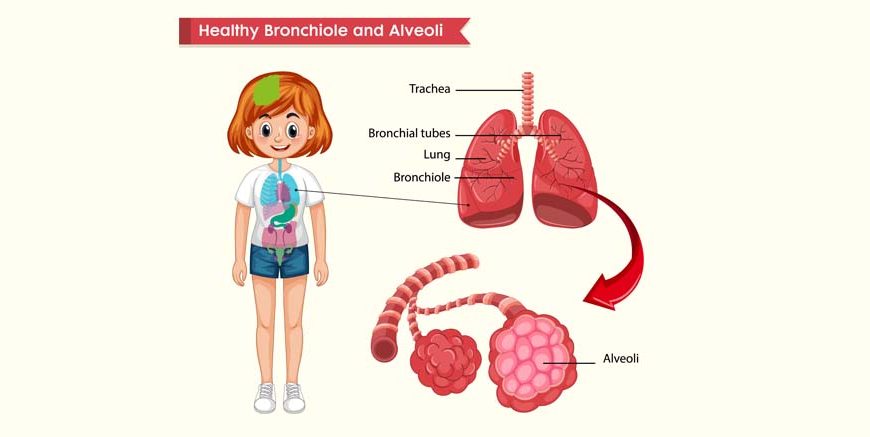
The lungs are one of the most important organs of the human body. They help us breathe and supply oxygen to every cell. For students, understanding the lungs diagram makes it easier to learn how the respiratory system works.
Here, we will explain the structure of the lungs, how they work, their importance, and key facts, using clear, simple diagrams.
What Are Lungs?
Lungs are spongy, air-filled organs that form the main part of the respiratory system. They help in breathing by taking in oxygen and releasing carbon dioxide.
A short note on lungs:
- Humans have two lungs
- Lungs help in respiration
- They are protected by ribs
Where Are the Lungs Located?
Many students ask: “Where are your lungs located in your back?”
Lungs are located:
- In the chest cavity
- On either side of the heart
- Inside the rib cage
In a human body diagram, the lungs appear slightly toward the back, which is why pain in the lungs can sometimes be felt in the back.
Read More – Body Organs for Kids
Lungs Diagram and Its Importance
A lung diagram visually shows:
- Shape of lungs
- Internal parts
- Connection with the windpipe
Structure of Human Lungs
The structure of human lungs is designed to make breathing efficient.
External Structure of Lungs
From the outside:
- Lungs are pinkish and spongy
- Covered by a membrane called the pleura
- The right lung is larger than the left lung
A right lung diagram shows three lobes, while the left lung has two lobes.
Read More – Teaching Human Body Systems to Students
Internal Structure of Lungs
The internal structure of the lungs consists of many parts that help in breathing.
Main Internal Parts
- Trachea (windpipe)
- Bronchi
- Bronchioles
- Alveoli
These parts are clearly shown in a lungs diagram with parts or a lungs picture with parts.
Lung Anatomy Diagram Explained
A lung anatomy diagram or lungs diagram labels each part clearly.
Important Labels in a Lung Diagram Labelled
- Trachea
- Right and left bronchus
- Bronchioles
- Alveoli
- Lobes
Diagram of Alveoli in the Lungs
The diagram of alveoli in the lungs is very important.
What Are Alveoli?
- Tiny air sacs
- Located at the end of the bronchioles
- Site of gas exchange
Oxygen enters the blood here, and carbon dioxide is removed. A detailed lung diagram often zooms in on alveoli for better understanding.
Lungs Diagram Easy Drawing Tips
Many exams ask students to draw diagrams.
Simple Easy Lungs Drawing Steps
- Draw two balloon-like shapes
- Add a central tube (trachea)
- Divide into bronchi
- Label major parts
This method is useful for how to draw respiratory system for class 3.
Structure of Lungs Explained Simply
The structure of the lungs can be summarised as:
- The trachea divides into bronchi
- Bronchi divide into bronchioles
- Bronchioles end in alveoli
This structure allows maximum oxygen absorption.
Read More – The Human Skeleton and Bones
How Do Lungs Work?
Working of the Lungs
- Air enters through the nose
- Travels through the trachea
- Reaches lungs
- Oxygen enters blood
- Carbon dioxide exits
Importance of Lungs
Lungs are essential for life.
Importance of Lungs
- Supply oxygen to the body
- Remove carbon dioxide
- Maintain energy levels
- Support speech
Without lungs, survival is impossible.
Interesting Facts About Lungs
- Lungs float on water due to air
- The left lung is smaller because of the heart
- We breathe around 20,000 times a day
These facts help students remember concepts better.
How EuroKids Builds Strong EVS Foundations
When Environmental Studies (EVS) is introduced through observation, storytelling, nature walks, and hands-on exploration, young learners begin to understand their surroundings in a meaningful and lasting way. Instead of memorising facts about plants, animals, or seasons, children learn by experiencing and questioning the world around them. This is why structured early education programs focus on experiential and inquiry-based learning rather than rote memorisation.
At EuroKids, foundational EVS concepts are nurtured through the HEUREKA – Visible Thinking Curriculum. This approach encourages children to explore themes such as “My Family,” “My Community,” “Plants and Animals,” “Seasons and Weather,” and “Good Habits” through interactive discussions, thematic projects, role play, outdoor exploration, and guided observation.
The Visible Thinking framework helps children observe carefully, think deeply, and express their ideas confidently. Through activities like nature-based learning, environmental awareness projects, sensory exploration, and group conversations, children develop curiosity about how things grow, how communities function, and how they can care for the environment.
With a child-centric and play-based methodology refined over 20+ years and implemented across 1600+ preschools, EuroKids focuses on building awareness, responsibility, and curiosity first, allowing knowledge, empathy, and critical thinking skills to develop naturally over time.
Summary: About the Lungs
To conclude:
- A lung diagram helps understand breathing
- Shows structure, parts, and function
- Essential for the Indian school curriculum
Learning through diagrams makes biology easier and more interesting.
To explore more learning ideas, simple explanations, and early childhood resources, parents
can visit the EuroKids Blog. Those who wish to understand the preschool journey better or
explore enrolment options can find complete information on the EuroKids Preschool Admission
Page, where learning is designed to be joyful, engaging, and child-friendly.