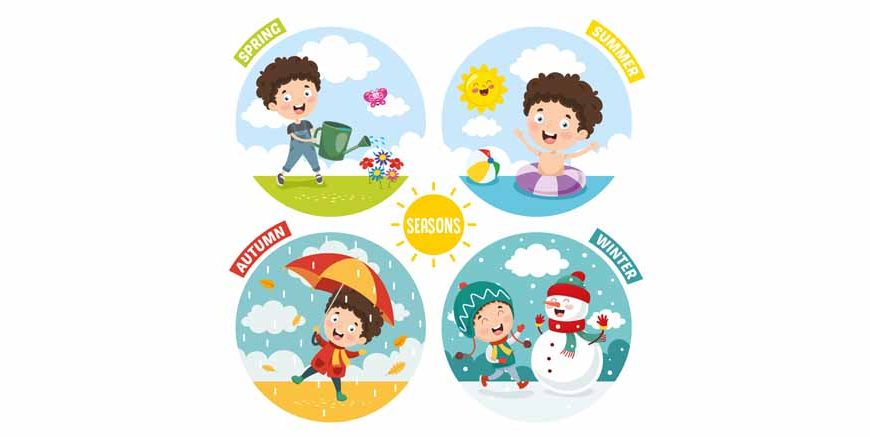
Every day begins with a simple question: “How is the weather today?”
For preschool children, this question opens the door to curiosity, observation, and learning. Whether they see bright sunshine, dark clouds, gentle rain, or a cool breeze, children naturally notice changes in the world around them. Introducing weather concepts at an early age helps them understand their environment while building observation, vocabulary, and critical thinking skills.
For Indian parents and educators, teaching weather is especially meaningful because children experience a wide variety of weather conditions throughout the year, from the hot summers of Rajasthan to the heavy monsoon rains in Kerala and the snowy winters of the Himalayas. At the same time, understanding weather prepares children to appreciate climates and seasons across the globe.
In this article, we will explore simple ways to introduce weather to preschoolers, explain the concept of weather and climate, and share engaging activities that make learning fun both at home and in the classroom.
What Is Weather?
Weather is the condition of the atmosphere at a particular place and time. It describes what we experience outside on any given day.
For example, the weather can be:
- Sunny
- Rainy
- Windy
- Cloudy
- Snowy
- Stormy
- Foggy
Young children can observe these changes simply by looking outside the window before starting their day.
Read More – Spring Season for Kids
What Are Weather Concepts?
Weather concepts refer to the basic ideas children learn about different weather conditions and how they affect everyday life.
Some simple weather concepts include:
- The sun gives us light and warmth.
- Rain helps plants grow.
- Wind moves leaves and clouds.
- Clouds may bring rain.
- Different weather requires different clothes.
These ideas help preschoolers connect science with their daily experiences.
Understanding the Concept of Weather and Climate
As children grow older, they begin to learn about weather and climate.
Although these words are often used together, they have different meanings.
Weather
Weather describes the condition of the atmosphere at a particular time.
For example:
- It is raining today.
- It is sunny this afternoon.
- It is windy outside.
Weather changes frequently, sometimes even within a single day.
Climate
Climate describes the usual weather pattern of a place over many years.
For example:
- Rajasthan generally has a hot and dry climate.
- Kerala experiences a tropical climate with heavy rainfall.
- Antarctica has an extremely cold climate.
Helping children understand the concept of weather and climate lays the foundation for future science learning.
Why Should Preschoolers Learn About Weather?
Weather is one of the easiest science topics for young children because they experience it every day.
Learning about weather helps children:
- Observe their surroundings.
- Build new vocabulary.
- Understand nature.
- Develop curiosity.
- Improve communication skills.
- Make simple predictions.
Weather also encourages children to ask questions, an important part of scientific thinking.
Common Types of Weather
Preschool children should first learn to recognise basic weather conditions.
Sunny
The sun shines brightly, and the weather feels warm.
Children may wear hats, sunglasses, and light clothing.
Rainy
Rain falls from clouds.
Children may use umbrellas and raincoats.
Cloudy
The sky is covered with clouds.
Some cloudy days stay dry, while others bring rain.
Windy
Air moves quickly, making leaves, flags, and kites flutter.
Snowy
Snow falls in colder regions.
Although many Indian children may not experience snow, they can learn about it through books, pictures, and videos.
Stormy
Storms often bring heavy rain, strong winds, thunder, and lightning.
Children should learn basic safety during storms.
Read More – Facts About Temperature for Kids
Teaching Weather Through Daily Observation
The best classroom is the world outside.
Each morning, parents or teachers can ask:
- What does the sky look like?
- Is the sun shining?
- Are there clouds?
- Can you feel the wind?
- Is it hot or cold?
These daily observations strengthen children’s understanding of weather concepts.
Weather Vocabulary for Preschoolers
Teaching simple words helps children describe what they see.
Useful vocabulary includes:
- Sun
- Cloud
- Rain
- Wind
- Storm
- Rainbow
- Thunder
- Lightning
- Hot
- Cold
- Warm
- Cool
- Fog
Children learn these words naturally when they are connected to real-life experiences.
Weather Activities for Preschool Children
Hands-on learning makes weather exciting.
Weather Chart
Create a daily weather chart where children place a picture showing the day’s weather.
Weather Walk
Take children outdoors to observe clouds, trees, wind, and sunlight.
Dress for the Weather
Show different clothes and ask children to choose what they would wear on a sunny, rainy, or cold day.
Cloud Painting
Use cotton balls or paint to create different cloud shapes.
Rain Experiment
Spray water on plants and explain how rain helps flowers and trees grow.
These activities help children understand weather through play.
Using Weather Videos for Learning
Many parents search for weather video resources to help children understand weather visually.
Age-appropriate educational videos can show:
- Rain forming in clouds.
- Snowfall in different countries.
- Strong winds moving trees.
- The water cycle.
- Different seasons around the world.
Watching weather for video content together with children allows parents to pause and discuss what children observe, making learning more interactive.
Weather Across India
India experiences a wide range of weather conditions.
Summer
Many parts of India become very hot between March and June.
Monsoon
Heavy rains arrive in many states from June to September.
Winter
Northern India experiences colder temperatures, while southern regions remain relatively warm.
Spring and Autumn
Some parts of India experience pleasant transitional seasons.
Learning about India’s weather helps children understand their own surroundings.
Weather Around the World
Children preparing for a global future should also learn that weather differs across countries.
For example:
- Canada experiences snowy winters.
- Australia has summer from December to January.
- The United Kingdom often has cloudy and rainy weather.
- The Middle East experiences hot desert conditions.
- Tropical countries near the equator receive frequent rainfall.
These comparisons help children appreciate the diversity of our planet.
Read More – Simple Ways to Engage Children with Science in Everyday Activities
Safety During Different Weather Conditions
Weather education should also include safety.
During Hot Weather
- Drink plenty of water.
- Wear a cap.
- Stay in the shade.
During Rain
- Carry an umbrella.
- Wear waterproof shoes.
- Avoid playing in flooded areas.
During Thunderstorms
- Stay indoors.
- Avoid standing under trees.
- Do not touch electrical appliances unnecessarily.
These habits help children stay safe.
Weather and Everyday Life
Weather affects many daily activities.
It influences:
- Clothing choices
- Outdoor games
- Farming
- Travel
- Festivals
- School activities
Understanding weather helps children make better decisions each day.
Interesting Facts About Weather
Children enjoy learning fun facts.
Fact 1
Clouds are made of tiny water droplets.
Fact 2
Rainbows appear when sunlight passes through raindrops.
Fact 3
Wind is moving air.
Fact 4
Lightning is hotter than the surface of the Sun for a brief moment.
Fact 5
No two snowflakes are exactly alike.
These facts make weather lessons exciting and memorable.
Simple Questions for Children
Parents and teachers can ask:
- What is today’s weather?
- What clothes should you wear today?
- Why do we carry umbrellas?
- What happens when it rains?
- Which weather do you enjoy the most?
These questions improve observation and communication skills.
How EuroKids Builds Strong EVS Foundations
When Environmental Studies (EVS) is introduced through observation, storytelling, nature walks, and hands-on exploration, young learners begin to understand their surroundings in a meaningful and lasting way. Instead of memorising facts about plants, animals, or seasons, children learn by experiencing and questioning the world around them. This is why structured early education programs focus on experiential and inquiry-based learning rather than rote memorisation.
At EuroKids, foundational EVS concepts are nurtured through the HEUREKA – Visible Thinking Curriculum. This approach encourages children to explore themes such as “My Family,” “My Community,” “Plants and Animals,” “Seasons and Weather,” and “Good Habits” through interactive discussions, thematic projects, role play, outdoor exploration, and guided observation.
The Visible Thinking framework helps children observe, think deeply, and express their ideas confidently. Through activities like nature-based learning, environmental awareness projects, sensory exploration, and group conversations, children develop curiosity about how things grow, how communities function, and how they can care for the environment.
With a child-centric and play-based methodology refined over 20+ years and implemented across 1600+ preschools, EuroKids focuses on building awareness, responsibility, and curiosity first, allowing knowledge, empathy, and critical thinking skills to develop naturally over time.
Tips for Indian Parents
Parents can make weather learning a part of everyday life.
Encourage Observation
Ask children to look outside every morning.
Read Weather Books
Choose colourful books about seasons and weather.
Use Simple Language
Explain weather using words children understand.
Connect Learning to Daily Life
Talk about weather during walks, travel, and playtime.
Watch Educational Weather Videos Together
Choose trusted weather for video resources designed for preschool learners.
These habits make learning enjoyable and meaningful.
Quick Revision
Let’s review the key ideas.
- Weather changes from day to day.
- Weather concepts help children understand the world around them.
- The concept of weather and climate teaches the difference between daily weather and long-term climate.
- Children can learn through observation, games, crafts, and educational videos.
- Weather knowledge encourages curiosity, science learning, and environmental awareness.
Conclusion
Introducing weather concepts to preschool children is one of the best ways to nurture curiosity and develop scientific thinking from an early age. By observing the sky, discussing daily weather, exploring the concept of weather and climate, and engaging in fun hands-on activities, children build valuable knowledge that stays with them throughout their education.
For Indian parents and educators preparing children for a global future, weather education provides much more than science lessons. It teaches observation, communication, environmental awareness, and problem-solving while helping children appreciate the incredible diversity of weather experienced across India and around the world.
To explore more learning ideas, simple explanations, and early childhood resources, parents can visit the EuroKids Blog. Those who wish to understand the preschool journey better or explore enrolment options can find comprehensive information at EuroKids Preschool Admission, where learning is joyful, engaging, and child-friendly.