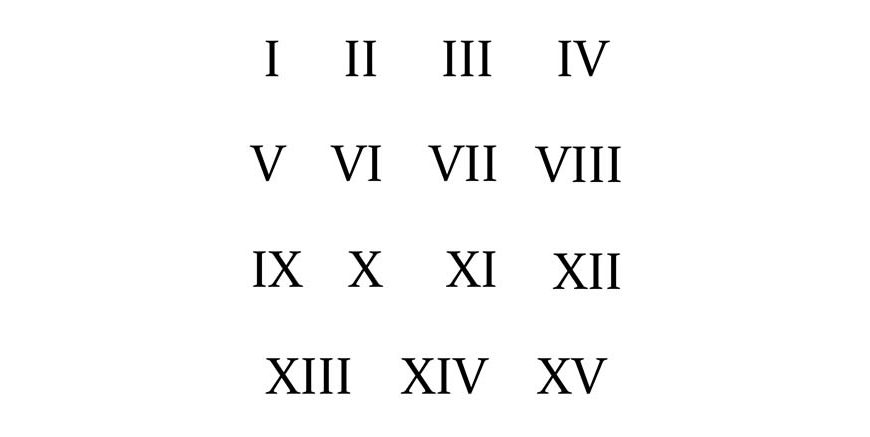
Imagine living thousands of years ago in the busy, dusty streets of ancient Rome. If you wanted to count your wooden toys or keep track of the shiny coins in your leather pouch, you could not use the standard digits we learn in school today. The numbers zero through nine simply did not exist there.
Instead of drawing numbers, the ancient people cleverly used capital letters from their own alphabet to solve difficult maths problems. Unlocking the secret behind these ancient symbols feels exactly like learning a hidden spy code. Today, we are going to crack a rather tricky piece of history and learn exactly how to write 999 in roman numerals.
The Core Rules of Ancient Counting
Before we tackle a massive figure, we must completely understand the basic building blocks. The Romans relied on just seven specific alphabet letters to represent every single amount. They did not have hundreds of different symbols to memorise.
Here is a quick list of the letters they used and their exact values:
- I stands for 1
- V stands for 5
- X stands for 10
- L stands for 50
- C stands for 100
- D stands for 500
- M stands for 1000
There is a very clever trick you need to remember. You cannot just write the same letter over and over again. The strict rule is that you can only repeat a letter three times in a row. So, if you want to write the number four, you cannot write IIII. Instead, you put a smaller letter just before a bigger letter to subtract it. Placing an I before a V means five minus one, which gives you four (IV). Writing 999 in this ancient format relies heavily on this clever subtraction rule.
Read More – Teaching Kids About Roman Numerals
Breaking Down the Number
To figure out the 999 roman number, we have to slice the large figure into three separate, bite-sized pieces. We need to look at the hundreds, the tens, and the single digits. We are essentially doing a simple math puzzle: 900 + 90 + 9. Let us look at each part closely.
First, we handle the nine hundred. We know that the letter for 1000 is M, and the letter for 100 is C. By placing the smaller C right in front of the bigger M, we are saying 1000 minus 100. That gives us CM.
Next, we move to the ninety. The letter for 100 is C, and the letter for 10 is X. By placing the smaller X directly in front of the bigger C, we are saying 100 minus 10. That translates to XC.
Finally, we sort out the number nine. The letter for 10 is X, and the letter for 1 is I. When we put the smaller I just before the bigger X, we are saying 10 minus 1. That gives us IX.
Discovering the roman number of 999
Now for the really fun part! We simply stitch those three solved pieces together like blocks of Lego. We take the hundreds block (CM), push it together with the tens block (XC), and attach the ones block (IX) right at the very end. When you line them all up in a neat row, the true roman number of 999 is proudly revealed as CMXCIX.
It looks like a very long, confusing password, but once you know the secret trick of splitting the numbers up, you can easily read it just like a Roman emperor would have done.
Read More – Importance of Math in Everyday Life
Conclusion
Learning to decode these ancient, historical letters shows us that mathematics is not just about memorising boring sums; it is a wonderfully logical, global language. The Romans might not have owned calculators or smart tablets, but they built a counting system so incredibly brilliant that we still spot it on grand clock faces, historic buildings, and the chapters of our favourite storybooks today.
It is genuinely thought-provoking to realise that a simple, messy combination of letters like CMXCIX carries the exact same mathematical weight as the digits we tap into our modern phones. When children understand these fun historical connections, maths suddenly stops feeling like a frustrating chore and transforms into a fascinating adventure through time. To uncover more engaging learning techniques and support your child’s brilliant educational journey, explore the EuroKids Blog and secure their place today through EuroKids Preschool Admission.
FAQs
Why cannot we just write IM for 999?
It seems much easier, but the strict ancient rules say you cannot subtract 1 (I) directly from 1000 (M). You are only allowed to subtract the letter I from V or X.
Is CMXCIX the absolute highest number you can write?
No, you can definitely write much larger numbers. For example, if you wanted to write exactly 1000, you would simply use the single letter M.
Why do primary school kids still learn these old numbers?
We still use them all over the world to mark the hours on old clocks, write the titles of important kings and queens, and label the grand chapters in thick reading books.