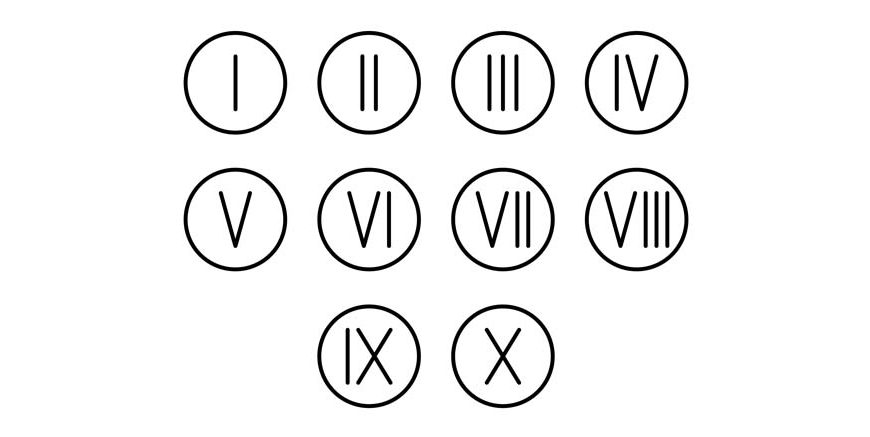
Secret codes are completely fascinating. Long before modern computers and smartphones existed, people had to invent highly clever ways to write down important information, keep track of their traded goods, and measure their vast cities. The ancient Romans, who built massive stone stadiums and incredibly long roads thousands of years ago, created a brilliant mathematical code using just the standard letters of their alphabet.
If you look closely at old clock faces, the end credits of classic films, or historical stone monuments in your town, you will undoubtedly spot these mysterious letters. Today, we are going to unlock one of the most interesting number puzzles out there. We will learn exactly how to write the number 444, translating it perfectly into the ancient language of the Romans.
Understanding the Number 444
Before we jump straight into decoding the ancient alphabet, let us first look at the number 444 itself. It is what mathematicians like to call a repeating digit number, which makes it look incredibly neat, symmetrical, and balanced on paper.
To truly understand this value, we need to break it apart using place value. The number is made up of three distinct mathematical pieces: four hundreds (400), four tens (40), and four ones (4). If you were to collect four hundred and forty-four shiny gold coins, they would easily fill a small wooden treasure chest and feel quite heavy to lift!
In our modern counting system, writing this amount down is exceptionally quick because we use the digits zero through nine. However, the Romans did not have a zero, nor did they use our familiar curly numbers. Instead, they had to build this specific value block by block using specific alphabet letters. Translating it requires us to look at each place value individually.
Read More – Teaching Kids About Roman Numerals
The Golden Rules of the Ancient Code
To solve the puzzle of 444 in roman numerals, we first need to gather our building blocks. The Romans used seven primary letters for all their maths: I (1), V (5), X (10), L (50), C (100), D (500), and M (1000). Think of these letters as colourful plastic building bricks. By snapping them together in different orders, you can create any amount you wish.
However, there is a very strict rule in this ancient game: you are never allowed to put four of the exact same letters next to each other in a row. For example, you cannot simply write 400 as CCCC. To get around this obstacle, the Romans invented a brilliant subtraction trick. If you place a smaller letter right in front of a larger one, you must subtract the smaller amount from the larger amount. This simple, clever rule is the absolute key to writing our repeating number correctly.
Step-by-Step: Writing 444 in Roman Numerals
Now, let us piece together our historical puzzle. We will tackle it in three simple steps, matching our hundreds, tens, and units perfectly.
First, we need to make 400. Because the rules state we cannot write four ‘C’s in a row, we take 500 (which is the letter D) and put 100 (which is the letter C) right in front of it to subtract it. Therefore, 400 becomes CD.
Next, we need to make 40. We use the exact same subtraction trick! We take 50 (the letter L) and place 10 (the letter X) right in front of it. Taking ten away from fifty leaves us with forty, which is written flawlessly as XL.
Finally, we need to build the number 4. We take 5 (the letter V) and place a 1 (the letter I) just before it. One less than five is four, giving us IV.dws perfectly written as CDXLIV!
Read More – The Importance of Math in Everyday Life
Conclusion
Learning to read an old numbering system is exactly like being handed a magical key to the past. It proves that mathematics is not just a modern subject we study quietly in a classroom; it is a continuously evolving, brilliant language that connects us directly to ancient builders, emperors, and children from thousands of years ago.
By understanding that CDXLIV is just another highly creative way to express the exact same amount as four hundred and forty-four, young learners quickly realise that numbers are incredibly flexible and full of hidden historical stories. The next time you see a strange combination of letters carved into an old stone building, remember the clever subtraction trick, and try to decode it yourself! To uncover more joyful ways to learn and to actively support your child’s brilliant educational journey, explore the EuroKids Blog and find all the details you need about EuroKids Preschool Admission today.
FAQs
What is the Roman numeral for 444?
It is correctly written as CDXLIV.
Why do we use CD to write 400?
The system’s rules state you cannot use four identical letters in a row. Placing C (100) before D (500) simply subtracts 100 from 500, giving you exactly 400.
What does the XL part stand for in this code?
The XL represents the number 40. By putting X (10) right in front of L (50), you are taking ten away from fifty.