Kids tend to drop the weirdest questions right when you are busy cooking dinner or rushing out the door. Suddenly, a strange pattern on an old clock face becomes a massive, urgent mystery. Why exactly do those capital letters look like numbers?
That is usually how the whole historical counting debate kicks off in most households. Math homework can sometimes feel like a literal trip back to ancient times. One minute you are helping your child with standard addition, and the next, they are staring at an alphabet soup that is supposed to equal a number.
Getting your head around these ancient symbols does not require a time machine or a history degree. It just takes a bit of simple code-breaking. If your child is currently battling their maths homework and desperately needs to know the exact roman number 13, we can sort that out right now. Forget the complicated textbooks for a second; let us break it down into plain English.
The basic building blocks
Before rushing in to build a big figure, you need the right tools in your belt. The ancient Romans kept things surprisingly stripped back. They absolutely refused to use the number zero. It just did not exist in their world. Instead, they picked a handful of letters from their own alphabet to handle all their daily trading, counting, and building.
To figure out 13 in roman numerals, you only need to look at two specific symbols. Nothing else matters for this particular puzzle.
- I stands for 1. Just picture a single finger held up to count a single item.
- X stands for 10. You can easily remember this by crossing your two index fingers over each other to make an X shape.
That is it. You now have the master keys to crack the code.
Read More – Teaching Kids About Roman Numerals
The simple maths behind the 13 roman number
So, how to write 13 in roman number format without getting completely confused? You break the modern number apart. You do not just invent a new letter out of thin air. Think of it exactly like pulling apart a tall stack of plastic building bricks on the playroom floor. Thirteen is essentially a solid block of ten, with three single blocks dropped right on top of it. The sum is literally just 10 + 3. Once a child sees that it is just a normal addition wearing a historical disguise, the panic usually disappears entirely.
Stitching it all together
Now, we just swap our normal digits for those old alphabet letters we learned a minute ago.
Take your block of ten. That is your X.
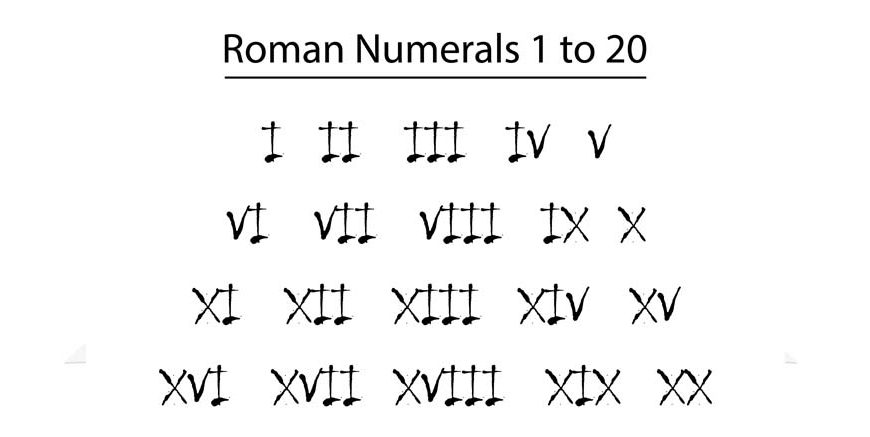
Now, take your three single units. Since I equals one, you just write it out three times. That gives you III.
Push them together. You put the large chunk at the front and stick the smaller chunk right on the end. When you line them up neatly on your homework paper, you get XIII.
There are no messy subtraction rules here. No confusing backwards letters. It is just a straight, easy, logical addition.
Read More – Importance of Math in Everyday Life
Where do we still see these symbols?
You might honestly be wondering why primary schools still bother teaching this stuff. Why learn an ancient language when our modern digits work perfectly well for everything we do? The truth is, these marks are hiding everywhere in our modern towns and cities. Once you show a child what to look for, they will start spotting them all over the place.
- Town hall clocks: Lots of big, traditional clock faces and expensive wristwatches still use these straight lines to mark the passing hours.
- Thick storybooks: Authors love using these old symbols to number the big, important chapters in their novels.
- Royal history: Kings and queens throughout history use these letters after their names to show who came first, second, or third.
- Movie sequels: Keep an eye on movie posters because big film franchises often use these numerals to number their sequel films.
Read More – Roman Numerals 1 to 20 for Kids
Conclusion
Seeing a child figure out a totally different way to count proves just how adaptable their developing brains really are. We do not just have one strict way to solve a problem in this world. It is quite a powerful thought when you realise that a student sitting at a kitchen table today can easily read the exact same mathematical code that ancient builders used to measure huge stone stadiums thousands of years ago.
Mathematics acts as a brilliant, invisible bridge connecting our modern classrooms straight to the muddy, fascinating past. Understanding these codes turns a boring homework task into a proper historical investigation. To find more down-to-earth advice on helping your child with their daily schoolwork, pop over to the EuroKids Blog and secure their spot for a bright future via EuroKids Preschool Admission.
FAQs
Can I write the number fourteen as XIIII?
No, the rules state you can only repeat a letter a maximum of three times in a row. So, fourteen has to be written as XIV, using a quick subtraction trick.
Why is there no zero in this ancient system?
The Romans just did not think they needed one. They only recorded amounts of things they physically had, like apples, soldiers, or coins. So, a symbol for ‘nothing’ seemed completely pointless to them.
Is the number XIII considered unlucky?
While plenty of modern cultures get highly superstitious about the number thirteen, the people in ancient Rome did not care about it at all. It was just another normal, everyday measurement for them.