School life is one of the most important parts of a child’s growing years. In India, classrooms are often diverse: students from different backgrounds, languages, cultures, and abilities learn together. In such an environment, learning how to become a good classmate is just as important as learning subjects like Maths, Science, or English.
Being a good classmate helps create a positive classroom atmosphere where everyone feels respected, included, and motivated to learn. Here, we will explain what it means to be a good classmate, why it matters, and how to teach kids to become good classmates in everyday school life.
Who Are Classmates?
Classmates are students who study in the same class or section. They may sit on different benches, come from different areas, or speak different mother tongues, but they all share the same classroom space.
In Indian schools, classmates often:
- Study together for exams
- Share books and notes
- Play together during recess
- Participate in group activities and competitions
Because students spend many hours each day with their classmates, their behaviour towards one another plays a big role in shaping their school experience.
Read More – Basic Values You Must Inculcate in Your Children
Why Is It Important to Be a Good Classmate?
Being a good classmate is not only about being polite. It is about cultivating values such as kindness, cooperation, and respect.
Importance of Being a Good Classmate
- Creates a friendly and safe classroom
- Reduces bullying and conflicts
- Helps students learn better together
- Builds teamwork and leadership skills
- Prepares children for future social life
In Indian culture, values like sharing, respecting elders, and helping others are strongly encouraged. These values begin in school, through interactions with classmates.
How to Become a Good Classmate
Learning how to become a good classmate is simple when children practise small positive habits every day.
1. Be Kind and Respectful
Kindness is the foundation of good behaviour.
Examples:
- Speak politely to classmates
- Do not make fun of anyone’s appearance, accent, or mistakes
- Respect classmates from different cultures or states
In Indian classrooms, students may speak languages such as Hindi, Tamil, Bengali, or Marathi. Respecting this diversity is very important.
2. Share and Help Others
Sharing is one of the first lessons children learn.
Ways to practise sharing:
- Share pencils, erasers, or books
- Help a classmate understand a lesson
- Lend notes if someone was absent
Helping classmates creates friendship and trust.
3. Listen When Others Speak
A good classmate listens carefully.
Good listening habits:
- Do not interrupt
- Raise your hand before speaking
- Pay attention when classmates answer questions
This shows respect and encourages confidence in others.
4. Include Everyone
A good classmate makes sure no one feels left out.
Examples:
- Invite everyone to join the games
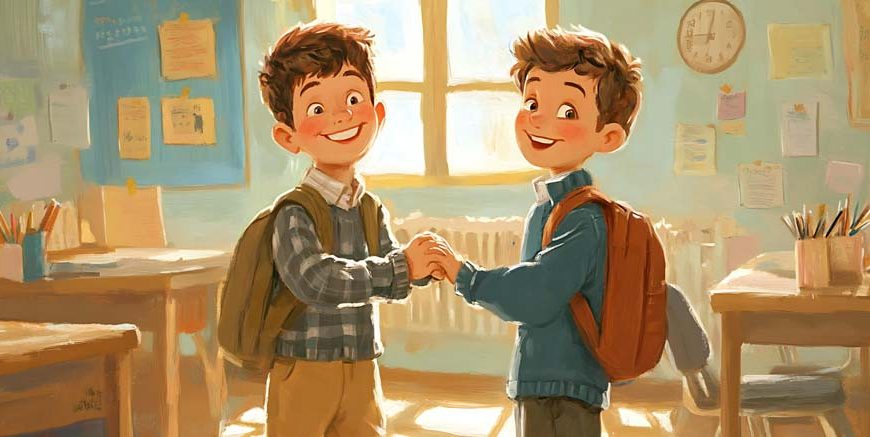
- Include new students in activities
- Sit with different classmates sometimes
In Indian schools, new students may join mid-session due to transfers. Welcoming them helps them feel comfortable.
5. Be Honest and Fair
Honesty builds trust among classmates.
Examples:
- Do not cheat in exams
- Do not blame others for your mistakes
- Play fairly during sports and games
Fair behaviour teaches integrity and responsibility.
Read More – Having a Best Friend Story for Kids
Classroom Behaviour That Makes You a Good Classmate
Positive Classroom Habits
- Follow class rules
- Keep the classroom clean
- Respect teachers and classmates
- Complete group work sincerely
Good behaviour helps everyone learn better and keeps the classroom peaceful.
How to Handle Conflicts with Classmates
Disagreements are natural, but how students handle them matters.
Healthy Ways to Solve Problems
- Talk calmly instead of shouting
- Say sorry when you are wrong
- Ask a teacher for help if needed
- Avoid physical fights or harsh words
Learning conflict resolution is an important life skill.
Role of Teachers in Teaching Good Classmate Behaviour
Teachers play a key role in shaping students’ behaviour.
How Teachers Encourage Good Classmateship
- Group activities and teamwork
- Classroom discussions on values
- Praising good behaviour
- Setting clear rules and examples
Teachers in Indian schools often include moral stories and value education to guide students.
Read More – Teaching Essential Manners for Kids
How to Teach Kids to Become Good Classmates
Parents and teachers often ask: How to teach kids to become good classmates? The answer lies in daily guidance and example.
1. Teach Through Stories
Indian stories, such as the Panchatantra and those from textbooks, teach lessons about kindness, honesty, and teamwork.
2. Encourage Role-Play
Role-playing classroom situations helps children understand:
- How to help a sad classmate
- How to apologise
- How to include others
3. Praise Good Behaviour
Positive reinforcement works well.
Examples:
- “You did a great job helping your classmate.”
- “I liked how you shared your lunch.”
4. Be a Role Model
Children learn by watching adults.
When parents and teachers show respect and kindness, children copy the same behaviour.
Good Classmate vs Bad Classmate
|
Good Classmate |
Bad Classmate |
|
Kind and helpful |
Rude or selfish |
|
Shares resources |
Refuses to share |
|
Listens carefully |
Interrupts others |
|
Includes everyone |
Leaves others out |
Understanding this difference helps children reflect on their own behaviour.
Benefits of Being a Good Classmate in the Long Run
Being a good classmate helps students beyond school life.
Long-Term Benefits
- Better communication skills
- Strong friendships
- Leadership qualities
- Emotional intelligence
- Success in teamwork-based careers
These skills are especially valuable in our country’s collaborative work culture.
How EuroKids Builds Strong English Foundations
Learning English at a young age becomes natural when children engage with stories, songs, real-life objects, and interactive activities. Instead of rote memorisation, EuroKids focuses on developing language skills through meaningful experiences that make reading, writing, speaking, and listening enjoyable.
At EuroKids, foundational English concepts are taught using storytelling, picture books, phonics-based exercises, and interactive vocabulary games aligned with the HEUREKA – Visible Thinking Curriculum. This approach helps children connect words to ideas, build comprehension skills, and express themselves confidently.
Activities such as narrating short stories, describing objects, and participating in “Think-Pair-Share” or “See-Think-Wonder” routines reinforce language understanding. Children learn grammar, vocabulary, sentence formation, and pronunciation in ways that feel playful yet purposeful.
With a child-focused, activity-driven methodology refined over 20+ years and implemented across 1600+ preschools, EuroKids emphasises communication and confidence first. As children enjoy English learning, fluency, reading comprehension, and writing skills develop naturally, laying the groundwork for strong lifelong language abilities.
Simple Tips for Students to Remember
- Treat classmates the way you want to be treated
- Help without expecting rewards
- Respect differences
- Say “please,” “thank you,” and “sorry”
- Choose kindness every day
Small actions can make a big difference.
Being a Good Classmate Is a Life Skill
Learning how to become a good classmate is not just about school rules; it is about becoming a good human being. In Indian classrooms, where unity in diversity is a daily experience, being kind, respectful, and helpful makes school life happier for everyone.
When parents, teachers, and students work together to understand how to teach kids to become good classmates, schools become places of learning, friendship, and growth. A good classmate today becomes a responsible citizen tomorrow.
To explore more learning ideas, simple explanations, and early childhood resources, parents
can visit the EuroKids Blog. Those who wish to understand the preschool journey better or
explore enrolment options can find complete information on the EuroKids Preschool Admission
Page, where learning is designed to be joyful, engaging, and child-friendly.