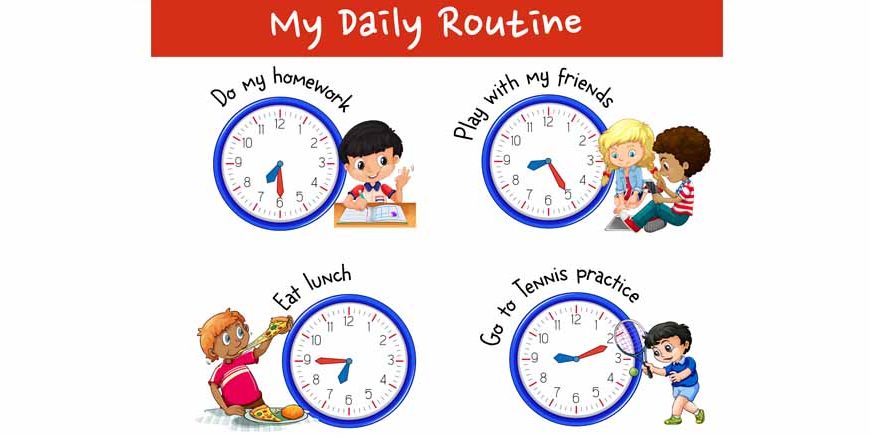
Getting a seven-year-old out of bed, fed, and into the school bus without a minor meltdown is a challenge that most Indian parents face every single morning. You might find yourself repeating the same instructions over and over again, yet shoes remain untied, and school bags remain unpacked. The root of this morning’s chaos is rarely stubbornness. More often, children simply lack a clear, predictable structure to their day. When young learners do not know what comes next, they feel anxious, and that anxiety manifests as resistance.
Establishing a structured timeline solves this exact problem. By introducing a consistent set of habits, you transform stressful mornings into smooth, cooperative routines. In this blog, we will explore some essays on my daily routine in English.
10 Simple Lines on My Daily Routine for Class 1
- I get up early in the morning.
- I clean my teeth
- Then I take my bath
- After my bath, I take my breakfast.
- At 7:00 AM, I go to school.
- I returned home from school at 1:30 PM.
- I rest after my lunch daily.
- I play for one hour in the evening.
- I take my evening milk and sit to study.
- I take my dinner at 9:30 PM and go to bed by 10:00 PM.
Read More – Essay On Time Management for Kids
Short Paragraph on My Daily Routine
Every day, I wake up at 6:30 AM and start my day by getting ready for school. After brushing my teeth and taking a bath, I go downstairs to have a quick breakfast with my family. Then I put my backpack and head out to catch the bus. During my classes, I make sure to pay attention and take notes to stay on top of my class work. Once the school day is over, I spend time at the library studying or participating in extracurricular activities like sports. After that, I go home, have dinner, and spend the rest of my evening doing homework or relaxing before going to bed at around 10:00 PM. This is my daily routine that keeps me organised and helps me prioritise my responsibilities.
Paragraph on My Daily Routine
My name is Sergei. I am 12 years old. I wake up at 7:00 A.M every day except Sunday. After waking up, i do morning exercises. I wash and clean my teeth with a toothbrush and comb my hair. Then I have breakfast. In the mornings, I like to eat eggs or omelettes and a cheese sandwich. After having my breakfast, I get ready for school. It takes me 10 minutes to get to school. My lesson begins at 8:30 A.M. At 2 o’clock the lessons are over. I usually have 6 or 7 lessons a day. I return home at around 2:30 P.M and rest.
After coming home, I freshen up and have my lunch. After completing my lunch, I do my homework and go for a walk with my friends. In the evening, I take out my bike and my training lasts for an hour. Then I have dinner at 8:30 P.M. My parents and I spend some time together; sometimes we even go outside to the park or go shopping. Then I come home, and at around 10:00P.M, I shower, brush my teeth, and go to bed.
Read More – Essay on Good Habits in English for Kids
Practical Tips for Parents to Set up a Routine
- Young children respond well to pictures. Create a colourful chart with drawings or stickers that represent each task, such as a toothbrush for morning care or a book for study time. Let your child place a tick mark next to each completed task.
- While it is tempting to let children sleep in late on Saturdays and Sundays, such drastic changes can disrupt their internal biological clocks. Keep wake-up and bedtimes within one hour of the weekday schedule.
- Children hate stopping a fun activity abruptly. Instead of shouting that playtime is over, give a five-minute warning so they can mentally prepare for the next task.
- Praise your child when they follow the routine without being asked. Small rewards, like an extra bedtime story on Friday night, reinforce positive behaviour.
Helping Children Develop Good Habits
At EuroKids, children are encouraged to develop positive daily habits through structured learning experiences and engaging activities. Teachers help children understand the importance of routines, time management, personal hygiene, healthy eating, and responsibility. These early habits contribute to confidence, independence, and overall development. By creating a nurturing environment that balances learning and play, EuroKids helps children establish routines that support academic success, healthy lifestyles, and lifelong positive habits.
Conclusion
A childhood routine forms the foundation for a well-balanced lifestyle for children. It is important to teach children to maintain their daily schedule, as it will help them reduce daily stress and cultivate lasting habits. Starting these habits early helps build focus and discipline.
For more insightful parenting guides and expert child development advice, explore the EuroKids Blog. If you want to give your child the perfect start to their academic journey, consider enrolling them at EuroKids today.
Frequently Asked Questions
What is the best bedtime for a child in Class 1?
Most children aged six to eight require between nine and eleven hours of sleep every night.
How much study time should a Class 3 student have at home?
A student in Class 3 generally benefits from forty-five to sixty minutes of focused study time at home.
Should weekends follow the same schedule as weekdays?
You can allow a little flexibility on weekends, but you should keep the wake-up and bedtime within 1 hour of your usual routine.
Why is a daily routine so important?
Daily routine can sound boring or predictable but it is actually really important for us. It helps us manage everyday stress, increase productivity, and leads to more quality sleep.