

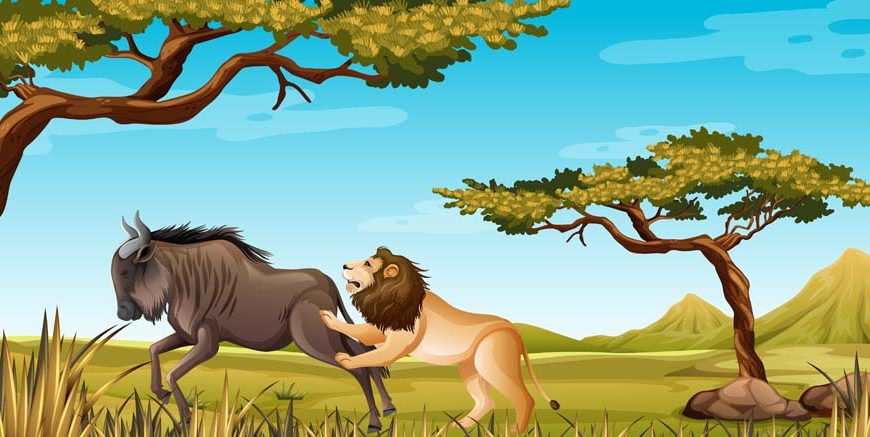
Bedtime in most homes with young children follows a familiar routine. You pull up the blankets, adjust the pillows, and get asked for a story before the light goes off. Children love hearing about clever monkeys, greedy wolves, and animals getting into trouble. Beyond keeping things calm before sleep, these old fables do a lot of quiet teaching. They give kids new words to use, and they show what happens when people make poor choices. If you tell a child not to show off or act fake, they will probably forget your words ten minutes later. But tell them a quick story about an animal that got into trouble wearing someone else’s coat, and they remember the point right away. The classic tale of the donkey in the lion’s skin gives mums and dads an easy way to talk about honesty without turning it into a boring lecture.
Characters in the Story
- The Donkey: A silly pack beast who finds a hunter’s pelt and uses it to scare his neighbours.
- The Villagers: Regular farming folk who run away in fear until they hear a familiar sound.
The Story of the Donkey in the Lion’s Skin
A long time back, a washerman had a donkey that carried dirty laundry down to the pond every single morning. The donkey hated the work. He was tired of dragging heavy bundles through the mud and listening to his master shout.
One day, while roaming near the edge of the woods, the donkey tripped over something rough lying across a rock.
“What is this?” he muttered, sniffing the yellow fur.
Hunters had shot a lion days before, stripped the skin, and left it out to cure in the warm sun.
The donkey picked the dry pelt up with his teeth. He pulled it over his ears, let the heavy mane drape across his shoulders, and dragged the fur down his legs. Then he walked over to a muddy ditch to see what he looked like.
“Well now,” he thought, staring at his reflection in the still water. “Look at those sharp eyes and that thick mane. I look like the ruler of the jungle. Nobody in the lane will ever take me for a washerman’s beast. Time to show the village who is in charge.”
He marched down the main dirt road towards the village market.
The minute the farmers and shop owners caught sight of what looked like a man-eating predator heading their way, everyone lost their heads.
Women dropped their vegetable baskets right in the dirt, scooped up their toddlers, and ran inside. Shopkeepers scrambled behind their wooden counters and bolted their heavy timber shutters. Within two minutes, the entire market stood completely empty. Not a dog barked.
The donkey stood in the centre of the road, delighted with himself.
“Look at that,” he said under his breath. “Yesterday they prodded me with a stick, and today they hide behind locked doors just seeing my shadow.”
He took his sweet time wandering through the stalls. He chewed on fresh cabbages, munched on crisp carrots, and swallowed sweet melons till his sides felt ready to burst. When he finished eating, he ambled back to the forest shade to nap.
This went on for three whole days. Whenever his belly started rumbling, the beast put on the yellow pelt and trotted down the road. Every single time, the terrified villagers ran away, leaving fresh grain and vegetables out on the street. With every successful trip, the donkey grew bolder and ruder.
By the fourth afternoon, the village elders decided they had had enough of running away.
“We cannot leave our shops abandoned every afternoon,” said a farmer. “The creature just walks in, eats our food, and goes back to the trees. Let us grab our lathis, hide behind the tall grass near the village gate, and see where it goes.”
A few hours later, the donkey showed up again. He filled his stomach with stolen melons, picked a bundle of fresh sugar cane, and strolled into a green field near the tree line.
He felt so pleased with his clever trick that he wanted the whole world to know how clever he was. He tossed his head, threw out his chest, opened his mouth, and tried to let out a loud roar to celebrate his win.
Instead of a mighty jungle roar, a flat, grating sound tore through the quiet air: “Hee-haw! Hee-haw! Hee-haw!”
The farmers waiting behind the hedges stopped, turned around, and looked at one another.
“Did you hear that?” whispered one of the men. “That is no jungle cat. That is just Ramu the washerman’s grey pack animal, playing a cheap trick on us with dried fur.”
Realising how an ordinary pack beast had terrified the whole town for days, the angry farmers picked up their heavy bamboo sticks. They ran across the field, caught the creature by his long ears, pulled off the borrowed coat, and gave him a thorough thrashing before dragging him back to his owner’s shed.
Read More – Short Moral Stories For Kids in English
What Happens in the Story
A tired pack beast finds a dried lion hide left behind by hunters near the forest edge. He puts the fur on, notices he looks fierce, and marches into town to frighten the local people. Terrified by the sight, the villagers run into their houses and leave all their food stalls open. The animal feasts on vegetables, takes extra produce, and repeats the trick for several days.
Eventually, the farmers hide in the grass to track the beast. When the disguised animal tries to roar out of pure arrogance, he lets out an unmistakable bray instead. Hearing the truth, the farmers see right through the donkey in lion skin disguise. They grab their sticks, strip off the pelt, and punish him for his deceit.
Moral of the Story
The main moral of the donkey in the lion’s skin is simple: putting on fancy clothes or pretending to be someone else never changes who you actually are. You might manage to trick people for an afternoon with a false show, but the moment you open your mouth or start working, your real habits and speech will show right through.
How EuroKids Builds Real Confidence in Young Minds
EuroKids designs its pre-primary centres around this hands-on, practical approach. Instead of rigid lectures, classrooms feature open play paths, low activity tables, and dedicated storytelling spots. Teachers bring old animal fables to life using simple puppets, short classroom skits, and group music sessions. Little ones practice sharing their thoughts during circle chats, learn to take turns during games on the play turf, and work with colours and clay at sensory tables. By encouraging honest self-expression and basic life skills, EuroKids helps young learners develop clear speech, good social manners, and the steady confidence they need when they move on to primary school.
Read More – Lion and Rabbit Story with Moral for Kids
Conclusion
Teaching children to be happy in their own skin gives them a sturdy foundation for the years ahead. When we show our children that speaking plainly, admitting mistakes, and putting in honest work matter far more than showing off, we give them habits that last a lifetime. A child who learns to value their natural abilities grows into a dependable, balanced person who earns real respect from those around them.
To read more practical parenting pieces and child development stories, explore the EuroKids Blog, and visit your neighbourhood centre to speak with our staff about simple EuroKids Preschool Admission options for your child today.
Frequently Asked Questions
What is the main moral of the donkey in the lion’s skin?
The story shows that a disguise cannot hide your true self, and pretending to be someone you are not always leads to trouble.
Why did the farmers realise the animal was not a real predator?
The villagers figured out the trick the moment the donkey opened his mouth to boast and let out a loud bray instead of a roar.
Who wrote the original story of the donkey in the lion’s skin?
The tale comes from the ancient Greek fabulist Aesop, with a matching story recorded in the Buddhist Jataka tales.
How does this animal fable help young school children?
It uses a funny, relatable animal mistake to show children why honesty and genuine effort always work better than empty boasting.