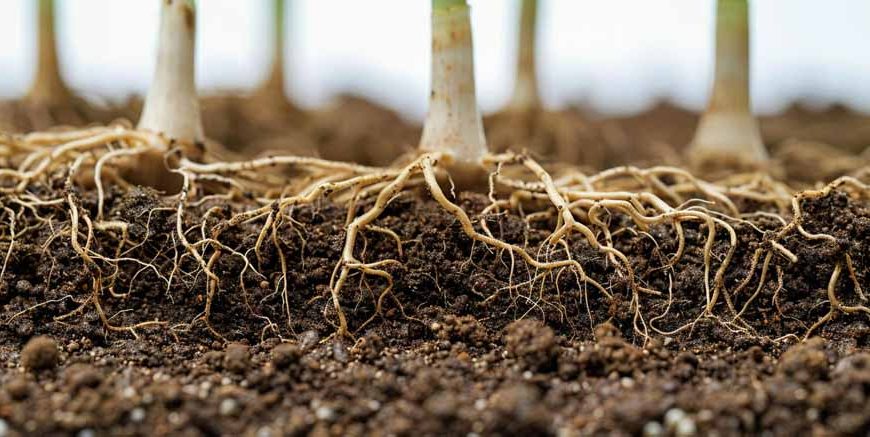
Imagine trying to build a heavy, tall brick wall on top of loose, dry beach sand. Without a strong foundation holding it down, the very first gust of wind would knock the entire wall completely over. Plants face this exact same physical challenge every single day. To grow tall, produce heavy fruits, and survive massive rainstorms without falling over, they must build secret, powerful foundations hidden entirely out of our sight.
Today, we are going to dig deep into the garden dirt to uncover this hidden engineering. We will explore the exact root system definition, look closely at the two main ways plants anchor themselves into the ground, and learn how to identify them the next time you are playing outside in the soil!
Building the Foundation: Root System Definition
Before we start comparing different shapes and sizes, we need to understand the basic science. The formal root system definition describes the descending portion of a plant that typically grows downward into the soil.
This underground network has three incredibly important jobs. First, it acts as a physical anchor, holding the plant firmly in the dirt. Second, it acts like a giant living sponge, absorbing vital water and dissolved minerals from the earth. Finally, many root systems act as underground refrigerators, storing extra food and energy for the plant to use during the cold winter months.
While all plants need to perform these three jobs, they do not all use the same strategy. The plant kingdom is generally divided into two main underground designs: the tap root and fibrous root systems.
Read More – Types of Plants for Kids
What is a Tap Root?
If you want to understand the taproot and fibrous root difference, you must first look at the heavy lifter of the plant world. A tap root system features one massive, thick, primary root that grows straight down, pointing directly toward the center of the earth.
This thick main body is called the primary root. From this giant central pillar, much smaller, thinner roots (called lateral roots) branch out horizontally to the sides. Because this system drills so incredibly deep into the ground, it is nearly impossible to pull out by hand. This deep-diving ability is a brilliant survival trick. When the summer gets incredibly hot and the topsoil dries up entirely, a plant with a deep tap root can still drink water that is safely hidden deep underground.
What is a Fibrous Root?
On the exact opposite side of the garden, we find a completely different survival strategy. A fibrous root system example looks absolutely nothing like a thick central pillar. Instead, it looks exactly like a messy, tangled, bushy head of hair!
In this system, there is no single main leader. Instead, hundreds of thin, moderately branching roots grow out from the base of the plant stem all at the very same time. They are all roughly the exact same size. Instead of diving deep, these fibrous root examples spread out widely and remain very shallow, sitting just inches under the surface of the dirt.
This wide, sprawling net is an amazing tool for catching fresh rainwater the absolute second it hits the ground. A fantastic real-world example is the rice fibrous root. Rice plants grow in flooded, muddy water fields called paddies. If a rice plant had one deep root, it would struggle in the thick mud. By using a wide, shallow web of fibrous roots, it can easily absorb nutrients right from the muddy surface water.
Difference Between Tap Root and Fibrous Root
If you are a student preparing for a science test, knowing how to clearly explain the difference between tap root and fibrous root is a guaranteed way to score high marks.
If you are looking for the difference between taproot and fibrous root for class 3, you can focus on the simple shapes: one looks like a giant carrot, and the other looks like a messy broom. However, if you are studying the difference between taproot and fibrous root for class 4, you need to understand their scientific behaviors.
Here is a clear comparison chart to help you master the topic:
|
Feature |
Taproot System |
Fibrous Root System |
|
Main Shape |
One thick primary root with tiny side branches. |
A large cluster of thin, equal-sized roots. |
|
Growth Depth |
Drills very deep into the subsoil. |
Spreads out wide and shallow in the topsoil. |
|
Food Storage |
Often stores extra food (making them thick and crunchy). |
Does not typically store large amounts of food. |
|
Anchoring Power |
Very hard to uproot due to extreme depth. |
Holds the topsoil together tightly, preventing mudslides. |
|
Lifespan |
Usually found in plants that live for many years (like trees). |
Generally found in short-lived plants (like seasonal grasses). |
Read More – Helping Kids Understand the Importance of Trees
Differentiate Between Fibrous Root and Adventitious Root
Just when you think you understand the rules of biology, nature throws a fun curveball! Sometimes, you will be asked to differentiate between fibrous root and adventitious root systems.
While both might look like a tangle of thin strings, the difference between fibrous and adventitious roots is all about where they come from. A standard fibrous root grows from the very bottom base of the plant stem, safely under the dirt. An adventitious root is a rebel! It can grow from almost anywhere else on the plant, including the leaves, the upper branches, or the sides of the stem high above the ground.
If you have ever seen the thick, rope-like vines dangling down from the branches of a giant Banyan tree, or the tiny little legs a climbing ivy plant uses to stick to a brick wall, you are looking at adventitious roots!
Example of Tap Root and Fibrous Root
The absolute best way to understand taproot and fibrous root structures is to explore your own kitchen or backyard. Here is a helpful list of taproot and fibrous root plants name categories so you can spot them in the wild:
- Taproot Examples: Think of the crunchy vegetables you eat! Carrots, radishes, beetroots, and turnips are all giant tap roots. You are actually eating the plant’s stored food! Large, heavy trees like mango, oak, and pine also use this deep system to hold their massive weight.
- Fibrous Root Examples: Think of the plants that cover the ground. Lawn grass, wheat, sweet corn, onions, and bamboo are excellent examples. If you pull a clump of grass from the yard and see a massive clump of dirt clinging to a web of tiny strings, you have found a fibrous system!
Read More – How Do You Make Science Interesting for Kids?
Conclusion
To summarize our botanical adventure, every single plant on Earth relies on a hidden underground network to survive. By exploring an example of tap root and fibrous root, we see how perfectly nature adapts to different environments. The deep-drilling taproot finds hidden underground water during severe droughts, while the wide, shallow fibrous root examples quickly catch morning dew and hold the topsoil tightly together to prevent the earth from washing away.
Learning about these invisible, hardworking systems leaves us with a truly inspiring thought. When we look at a beautiful garden, we give all our praise to the bright, colorful blooming flowers and the lush green leaves. But the true strength, survival, and foundation of that beautiful flower come from the messy, dark, quiet work happening entirely out of sight. It reminds us that having a strong, deep foundation is the most important part of growing up, even if nobody else can see it. To read more fun and educational articles, check out the EuroKids Blog, and visit our website for details on EuroKids Preschool Admission.
FAQs
Can a plant have both types of roots at the exact same time?
Generally, a plant starts its life from a seed with a tiny taproot. In fibrous plants, this initial taproot quickly dies off and is replaced by the bushy fibrous web. So, as mature plants, they rely on one primary system.
Why are carrots orange if they grow completely in the dark dirt?
Carrots are thick taproots that store a specific nutrient called beta-carotene. This specific nutrient naturally produces a highly vibrant orange pigment, regardless of whether it is exposed to sunlight or not!
Which root system is better for stopping soil erosion on a hill?
The fibrous root system is the absolute champion of stopping erosion. Because its shallow, tangled web spreads out so widely, it acts like a tightly woven net that grabs the topsoil and stops it from washing away during heavy rainstorms.
Are adventitious roots only found on giant trees?
Not at all! Many common houseplants, like the popular Money Plant (Pothos), grow small adventitious roots right off the sides of their green vines to help them climb up walls and wooden poles.