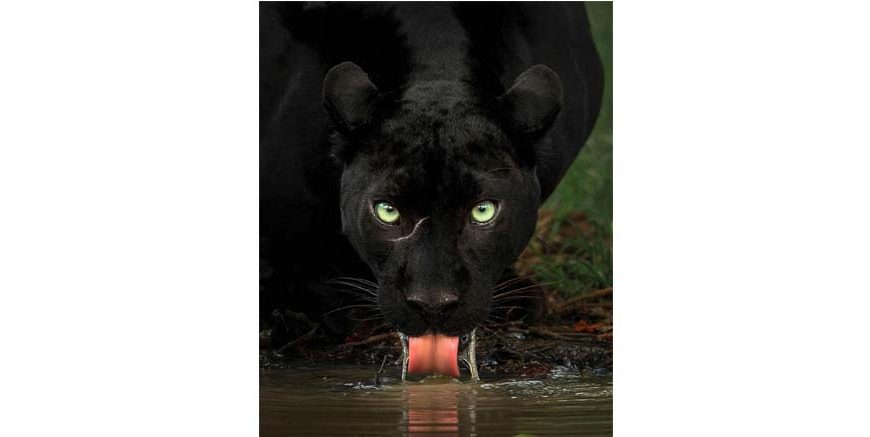
The black panther is one of the most mysterious and fascinating wild animals in the world. Known for its dark colour, silent movement, and powerful hunting skills, the black panther has always captured human imagination. In India, the black panther is especially admired because it is closely linked to our forests, wildlife conservation efforts, and cultural stories.
Here, we provide detailed, easy-to-understand information about the black panther for students, covering its meaning, scientific classification, habitat, speed, diet, and conservation status.
What Is a Panther?
Before understanding the black panther, it is important to answer a basic question: What is a panther?
A panther is a general term used for big cats belonging to the genus Panthera. These include:
- Lions
- Tigers
- Leopards
- Jaguars
So, panther in English does not refer to a single species. Instead, it refers to a group of powerful wild cats.
Read More – Wild Animals for Kids
What Is Black Panther?
A black panther is not a separate species of animal. The term black panther usually refers to:
- A black leopard (found in Asia and Africa, including India)
- A black jaguar (found in South America)
In India, the real black panther is actually a black leopard. Its black colour is caused by a genetic condition called melanism, which results in excess black pigment.
Black Panther Meaning
The “meaning” of black panther comes from its appearance and behaviour:
- “Black” refers to its dark coat
- “Panther” refers to the Panthera genus
Symbolically, black panthers represent strength, mystery, courage, and stealth in many cultures, including Indian folklore and modern wildlife stories.
Black Panther Scientific Name
Since a black panther is not a separate species, its scientific name depends on the animal type:
- Black leopard scientific name: Panthera pardus
- Black jaguar scientific name: Panthera onca
So, when students ask for the black panther’s scientific name, the correct answer in India is usually Panthera pardus.
Panther Scientific Name and Classification
Panther Scientific Name
- Kingdom: Animalia
- Phylum: Chordata
- Class: Mammalia
- Order: Carnivora
- Genus: Panthera
This classification helps students understand information about panthers in biology and EVS.
Types of Panthers
There are different types of panthers, including:
- Leopard (Panthera pardus)
- Jaguar (Panthera onca)
- Lion (Panthera leo)
- Tiger (Panthera tigris)
The black panther is a colour variation found mainly in leopards and jaguars.
Read More – List of Animals That Live On Land And Water
Black Panther Habitat
The black panther habitat includes:
- Dense tropical forests
- Rainforests
- Grasslands near forests
In India, black panthers are mostly found in:
- Karnataka (Kabini forests)
- Kerala (Western Ghats)
- Maharashtra
- Assam
These forests provide enough cover for the black panther at night, where its black coat offers excellent camouflage.
Black Panther in the Dark
One of the most amazing abilities of the black panther is how it hunts in the dark. Its black coat helps it blend perfectly into shadows, making it almost invisible at night. Even though it looks fully black, faint spots can be seen under bright light.
This skill makes the black panther an expert night hunter.
Black Panther Speed
A black panther’s speed is impressive. It can run at speeds of:
- Up to 58 km/h
This speed helps it chase prey over short distances. Combined with strong legs and sharp claws, the black panther is one of the most efficient hunters in the wild.
What Do Black Panthers Eat?
Black panthers are carnivores, meaning they eat meat. Their diet includes:
- Deer
- Wild boar
- Monkeys
- Birds
- Small mammals
Black Panther Animal Characteristics
Some important black panther animal characteristics are:
- Strong muscular body
- Sharp retractable claws
- Excellent night vision
- Silent walking ability
- Powerful jaws
These features make it a top predator in Indian forests.
Read More – Names of Animals That Are Endangered For Kids
Black Panther Animal Facts
Here are some interesting black panther facts for students:
- Black panthers can climb trees easily
- They are mostly solitary animals
- They are excellent swimmers
- Their black colour helps them survive better in dense forests
How Many Black Panthers Are Left in the World?
There is no exact number because black panthers are not counted separately from leopards and jaguars. However:
- Less than 11% of leopards show melanism
- Black panthers are considered rare
So, when asking how many black panther in the world, scientists say they are uncommon and need protection.
Black Panther Pet: Is It Possible?
Black Panther Pet
Many people wonder if a black panther can be kept as a pet. The answer is no.
- Black panthers are wild animals
- Keeping them as pets is illegal in India
- They require large territories and special care
So, owning a black panther as a pet is unsafe and against wildlife laws.
Importance of Black Panthers in India
Black panthers help:
- Control prey population
- Maintain forest ecosystem balance
- Indicate forest health
India’s wildlife protection laws ensure their survival through national parks and sanctuaries.
How EuroKids Builds Strong EVS Foundations
When Environmental Studies (EVS) is introduced through observation, storytelling, nature walks, and hands-on exploration, young learners begin to understand their surroundings in a meaningful and lasting way. Instead of memorising facts about plants, animals, or seasons, children learn by experiencing and questioning the world around them. This is why structured early education programs focus on experiential and inquiry-based learning rather than rote memorisation.
At EuroKids, foundational EVS concepts are nurtured through the HEUREKA – Visible Thinking Curriculum. This approach encourages children to explore themes such as “My Family,” “My Community,” “Plants and Animals,” “Seasons and Weather,” and “Good Habits” through interactive discussions, thematic projects, role play, outdoor exploration, and guided observation.
The Visible Thinking framework helps children observe carefully, think deeply, and express their ideas confidently. Through activities like nature-based learning, environmental awareness projects, sensory exploration, and group conversations, children develop curiosity about how things grow, how communities function, and how they can care for the environment.
With a child-centric and play-based methodology refined over 20+ years and implemented across 1600+ preschools, EuroKids focuses on building awareness, responsibility, and curiosity first, allowing knowledge, empathy, and critical thinking skills to develop naturally over time.
Black Panther Facts Summary
Let’s summarise key black panther facts:
- The black panther is a melanistic leopard in India
- Scientific name: Panthera pardus
- Habitat: Dense forests
- Speed: Up to 58 km/h
- Diet: Carnivorous
- Status: Rare but protected
The black panther is a symbol of power, mystery, and ecological balance. Understanding what a black panther is, its habitat, speed, and role in nature helps students appreciate wildlife and conservation efforts in India. Learning about such animals encourages respect for nature and a sense of responsibility for protecting endangered species.
To explore more learning ideas, simple explanations, and early childhood resources, parents
can visit the EuroKids Blog. Those who wish to understand the preschool journey better or
explore enrolment options can find complete information on the EuroKids Preschool Admission
Page, where learning is designed to be joyful, engaging, and child-friendly.