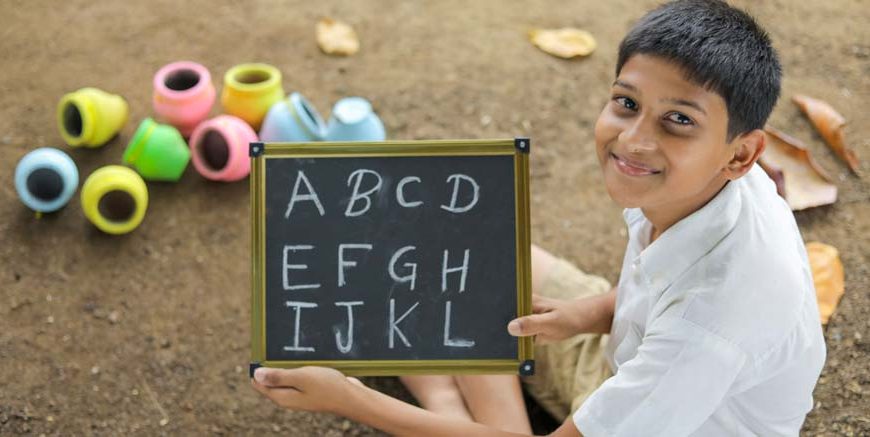
We start asking ourselves uncomfortable questions. Will hearing two languages in the classroom confuse my child? Will speaking Hindi at school slow down her English vocabulary before primary school admissions begin? Should we drop our mother tongue at home altogether so our child does not fall behind?
These worries are completely natural, but they rest on an outdated myth. Cognitive research and real classroom experience over the past two decades show the exact opposite. Exposing young minds to both Hindi and English during their earliest years does not slow them down. It actually activates cognitive pathways that help them grasp numbers, social cues, and abstract concepts much faster than children raised in strictly monolingual environments.
Let us look closely at the real bilingual preschool benefits and examine how a balanced dual-language foundation speeds up early childhood learning.
The Link Between Dual-Language Classrooms and Faster Learning
1. Sharper Focus in Busy Classrooms
Preschools are loud, energetic spaces. There are toys dropping, children singing, and teachers giving directions. A child accustomed to a dual-language setting is already an expert at filtering auditory noise. Their brain continuously listens for specific linguistic cues to decide which language to respond in.
Because their minds practise this selective listening all day, they develop superior attention spans. When the teacher sits everyone down for a storytelling session, the bilingual child settles in and absorbs the narrative faster because their brain knows how to tune out the chatter around them.
2. Earlier Grasp of Abstract Thinking and Symbols
Children who grow up hearing only one language often think an object and its name are the exact same thing. Why does this matter for early math and reading? Because reading and math are entirely built on abstract symbols. Letters are just symbols for vocal sounds, and numbers are just symbols for quantities. A child whose brain already understands that names are flexible labels grasps the idea that the written number “5” represents five physical wooden beads much faster than a peer who struggles with symbolic thinking.
3. Better Phonemic Awareness and Reading Readiness
When a young child learns both languages together, their ears get trained to detect an unusually wide range of phonetic nuances. They can hear the subtle difference between dental and retroflex sounds in Hindi, while also distinguishing between the soft and hard consonants in English.
This sharp auditory awareness is the foundation of phonics. When it comes time to read early picture books, bilingual children break down unfamiliar words and blend phonemes with far greater accuracy.
Read More – Things Kids Learn in Preschool
Natural Stages of Preschool Language Development
|
Age Range |
What You See at Home and School |
What Is Happening in the Brain |
|
2 to 3 Years (The Absorption Stage) |
The child listens quietly, understands directions in both Hindi and English, but speaks mostly in single words or short phrases. |
The brain is building two massive vocabulary banks side by side without mixing up the meanings. |
|
3 to 4 Years (The Code-Mixing Stage) |
The child combines both languages in one breath. |
The child is actively problem-solving, grabbing the most accessible word to communicate their thought without slowing down. |
|
4 to 5+ Years (The Separation Stage) |
The child talks in full English sentences to their teacher and switches smoothly to Hindi when talking to their grandparents. |
The brain has completed the separation process, establishing high cognitive control and social awareness. |
How EuroKids Nurtures Dual-Language Learners
EuroKids understands the natural linguistic patterns of Indian households. Through its research-backed EUNOIA curriculum, EuroKids preschools create an environment where children build strong English communication skills while staying connected to their native roots. Classroom activities blend sensory phonics, interactive storytelling, dramatic play, and open conversation circles. This balanced method ensures that every child feels emotionally secure, speaks without fear, and develops the mental sharpness needed to thrive in higher primary grades.
Read More – Finger Family Nursery Rhyme for Kids
Conclusion
Language is far more than a set of rules for conversation; it is the mental workshop in which your child builds their understanding of reality. When you choose a preschool that welcomes both Hindi and English, you give your child a powerful developmental advantage. You are not dividing their attention between two competing systems. You are giving their brain a broader, richer set of tools for thinking, evaluating, and expressing ideas clearly. The mental agility they gain today will stay with them for life, laying the groundwork for strong academic performance and effortless social confidence.
If you want to read more practical parenting guides and child psychology insights, take a look at the latest posts on the EuroKids Blog, or stop by your neighbourhood centre to find out more about EuroKids Preschool Admission details for the upcoming academic session.
Frequently Asked Questions
1. What is the ideal age to introduce a child to a bilingual preschool setting?
The best window is between the ages of two and four years. During this early developmental stage, the brain absorbs pronunciation, vocabulary, and sentence structures naturally through daily play and observation, without the need for formal lessons.
2. Will learning Hindi at preschool make it harder for my child to read English later on?
No, it actually helps. Hindi has a strict phonetic structure, which trains a child’s ear to distinguish subtle vocal sounds with great accuracy. This refined ear makes it much easier for them to learn English phonics and decode unfamiliar words when they start reading independently.
3. How should parents react when a toddler mixes Hindi and English in one sentence?
Stay positive and let the conversation flow naturally. Code-mixing is a completely healthy and normal phase in bilingual development. Avoid correcting them harshly; simply repeat the idea back to them in a complete sentence using one language so they hear the proper structure.