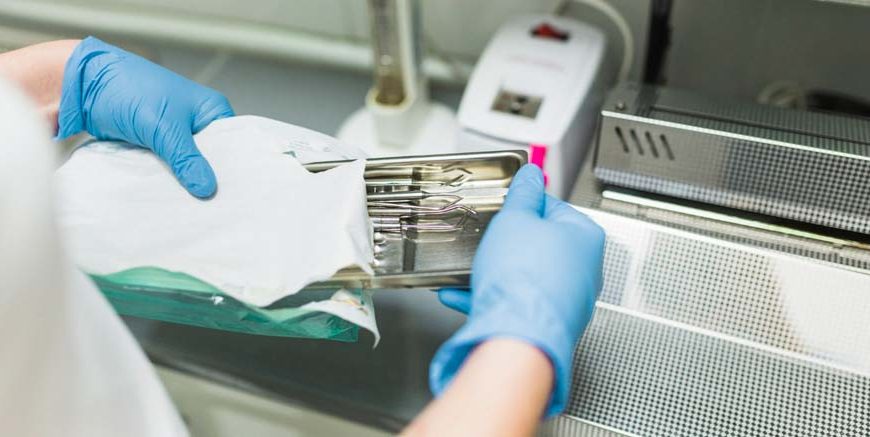
Let’s talk about dirty hands. When you spend the afternoon playing in the garden, you get mud under your fingernails. To get clean, you simply wash up with some warm water and soap. It works perfectly for us! But what if you are a scientist working with dangerous germs? Or a dentist preparing tools for a patient’s mouth?
Normal soap and water simply won’t cut it. Some invisible germs are incredibly tough and can survive regular washing. To defeat these tiny invaders, professionals use a super-powered cleaning machine. It is a true germ-destroyer. Let’s peek inside this amazing device, figure out how it works, and see why hospitals and labs absolutely depend on it every single day.
The Ultimate Germ-Fighter: Define Autoclave in Microbiology
Simply put, an autoclave is like a highly advanced, heavy-duty oven. If we want to safely define autoclave in microbiology, it is a specialized piece of equipment that uses tightly trapped, intensely hot steam to completely kill every single bacteria, virus, and spore hiding on tools and glassware. It doesn’t just wash things; it completely sterilizes them.
Read More – Science Quiz Questions and Answers for Kids
How Does It Work? What is the Principle of Autoclave?
Have you ever watched someone cook dry beans in a kitchen pressure cooker? Normal boiling takes hours, but a pressure cooker makes them soft in just twenty minutes.
The principle of autoclave microbiology relies on that exact same trick. So, what is the principle of autoclave? It is all about pressurized steam. When water boils inside a normal pot, the steam simply floats away. But inside an autoclave, the steam is trapped inside a heavy metal box. Because the steam cannot escape, the pressure inside builds up dramatically.
This high pressure forces the steam to become much hotter than normal boiling water, usually hitting around 121 degrees Celsius! This intense, pressurized heat easily melts away the tough outer shields of dangerous microbes.
If you ever flip open a science textbook and look at an autoclave diagram in microbiology, it honestly looks a lot like a bank vault. You don’t need to be an engineer to understand the parts and functions of autoclave machines. A standard autoclave diagram features a few main components. First, there is the heavy metal pressure chamber where the dirty tools sit. Below that is a heating element to boil the pure water.
On the outside, there is a pressure gauge that acts like a speedometer, letting the scientist know how intense the pressure is getting. Finally, there is a massive locking door to ensure none of that dangerous hot steam sneaks out into the room.
Step-by-Step: How to Use Autoclave
Running this machine takes a bit of practice. If you want to know how to use autoclave safely, it starts with preparation. Scientists wrap their tools in special paper or place them in safe plastic bags. They load the tools inside and lock the heavy steel door tight.
Next, they set the timer and the temperature. Once the cycle finishes, they cannot just yank the door open! That would be extremely dangerous because of all the built-up pressure. They have to wait patiently for the pressure gauge to drop back down to zero before safely opening the vault to retrieve their perfectly clean tools.
Read More – Technology for Kids
Autoclave Uses in Microbiology
The list of everyday autoclave uses is practically endless. Some of the most common autoclave machine uses happen in your local dentist’s office to clean the mirrors and scrapers they put in your mouth.
But things get really interesting when we look at autoclave uses in laboratory settings. Scientists are obsessed with keeping things clean. The primary autoclave uses in microbiology involve sterilizing glass test tubes, petri dishes, and even special liquid broths. If a scientist is trying to grow a specific type of good bacteria, they cannot risk bad bacteria accidentally ruining the experiment. Every single application of autoclave in microbiology is designed to guarantee a blank, completely germ-free canvas for scientists to work on.
Different Shapes: Types of Autoclave Machine
Not all of these machines look exactly the same. There are a few different types of autoclave machine depending on the specific job.
Small medical clinics often use tabletop models that look a lot like giant microwaves. But big hospitals and massive research centers need something much stronger. They use gigantic, room-sized bulk autoclaves where workers actually roll entire carts of equipment inside! Having different types of autoclave means that whether you are cleaning a tiny pair of tweezers or a mountain of dirty lab coats, there is always a machine perfectly sized for the job.
Read More – How do you make science interesting for kids?
Why Do We Need It? Advantages of Autoclave
Why go through all this trouble? Why not just dunk everything in boiling water?
The biggest advantages of autoclave technology are raw power and safety. Normal boiling water simply cannot kill certain tough germs known as “spores.” Pressurized steam completely destroys them. Plus, the machine uses absolutely no harsh, smelly chemicals, just pure water and heat. It is fast, highly reliable, and very safe for the environment.
Summary
To wrap things up with a short note on autoclave technology, this impressive machine is truly the quiet hero of human health. Without it, modern medicine and safe scientific research would be completely impossible.
It is a brilliant reminder of human cleverness. We took a simple, everyday force of nature, hot steam, and trapped it inside a heavy metal box to outsmart microscopic enemies that have existed for millions of years. It really makes you stop and wonder: what other simple, natural forces are waiting for us to figure them out and use them to change the world? To read more fun and educational articles, check out the EuroKids Blog, and visit our website for details on EuroKids Preschool Admission.
FAQs
How hot does the steam actually get inside the machine?
Because of the trapped pressure, the steam usually reaches at least 121°C (250°F), which is much hotter than standard boiling water!
Can you put plastic toys inside to clean them?
No! Only special, high-heat plastics can survive. Normal plastic toys or containers would completely melt into a sticky puddle.
How long does a normal cleaning cycle take?
It depends on how many tools are inside, but a standard sterilization cycle usually takes about 15 to 30 minutes once the machine hits the right temperature.
Do tattoo artists use these machines too?
Yes! Professional tattoo artists use small versions of this machine to completely sterilize their metal grips and needles to keep their clients safe from infections.