


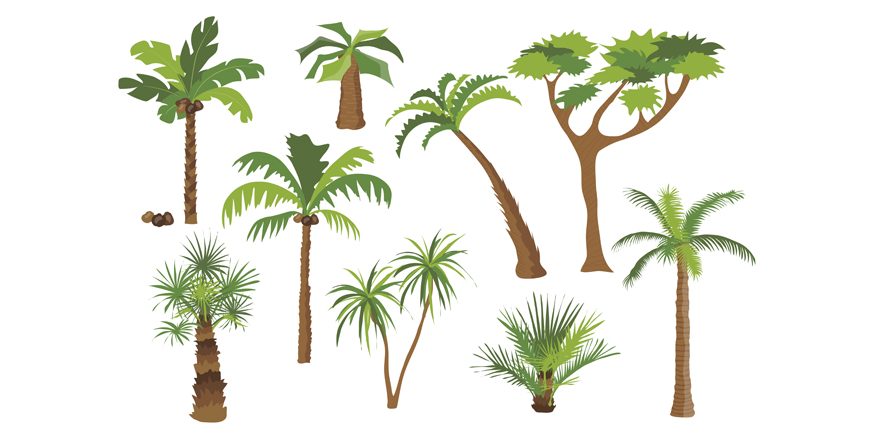
Kids notice these tall green trunks everywhere across Indian towns. They spot them along coastal highways, outside temple gates, in school courtyards, and in decorative brass pots inside hotel lobbies. Yet we rarely explain the wide range of types of palm trees growing right in front of them. Turning a daily observation into a brief chat about plants helps children look more closely at nature, ask better questions, and understand how living things adapt to heat and storms.
What Makes Palm Trees Different from Regular Trees?
Botanists place them in the family Arecaceae. Instead of woody limbs and bark, a palm has a single tall stem called a stipe, topped by a bunch of leaves called fronds. If you study all types of palm trees, you will notice they do not form annual growth rings like teak or rosewood. Their trunks are made of tough, rope-like fibres packed tightly together.
This internal design is why a coastal palm bends like a bow during a severe monsoon storm instead of snapping in half like an old garden tree. Teaching kids about different types of palm trees shows them how nature builds flexible structures to survive heavy rains and sea winds.
Read More – Types of Plants for Kids
Common Types of Palms Found Across India
1. The Coconut Palm
This is the most common palm along our coastline and across southern and eastern states. Its curved trunk bears ring-like leaf scars from the ground to the crown. It is a brilliant example of a plant where nothing goes to waste. Coastal families drink the sweet water, cook with the white flesh, thatch hut roofs with the dried fronds, and twist the brown husk into durable coir rope.
2. The Palmyra or Toddy Palm
Standing straight and dark across the dry plains of Tamil Nadu, Andhra Pradesh, and Bengal, the palmyra has a rough black trunk and a crown of spiky fan fronds. In peak summer, street vendors sell its cool, jelly-like ice apples, which children love eating on hot days. Centuries ago, people in India dried and pressed these exact fan leaves to write ancient manuscripts with iron needles.
3. The Areca Nut Palm
Grown in thick plantations across Karnataka, Kerala, and Assam, the areca palm grows tall and exceptionally slim, looking almost like giant bamboo. It produces heavy clusters of orange betel nuts right below its green leaves. Its neat, slim shape makes it very easy for a schoolchild to spot next to a thicker coconut trunk.
4. The Royal Palm
You often see these grand trees planted along entrance drives in government complexes, universities, and newer gated colonies. The royal palm has a smooth, pale grey trunk that looks like smooth cement, topped with a clean green neck and heavy feather fronds that curve gracefully towards the ground.
Indoor and Balcony Palm Varieties
1. The Areca Golden Palm
This is a favourite indoor plant with bright yellow-green stems growing in tight clumps. Children can take responsibility for watering its base and wiping dust off the leaves, learning how potted plants keep indoor rooms fresh.
2. The Rhapis Lady Palm
With broad, glossy fan leaves and dark, fibrous stems, this plant thrives in indirect indoor light. It shows children that certain tropical plants can thrive without being in direct, harsh sunlight all day.
Read More – Banyan Tree for Kids
How EuroKids Connects Young Learners with the Natural World
EuroKids pre-primary centres weave this sensory outdoor discovery into daily morning routines. Instead of keeping toddlers on benches all morning, teachers organize garden walks, fallen leaf sorting, and bark-rubbing art activities on soft outdoor play mats. Toddlers feel the rough texture of tree trunks, compare pointed leaves with rounded leaves, and watch birds nesting in courtyard branches. Experienced educators use these moments to teach basic language, colours, and seasonal cycles in a gentle, cheerful way. By connecting early nature exploration with safe, hands-on activities, EuroKids helps little boys and girls build sharp observation habits, clear speech, and steady confidence before they enter big school.
Conclusion
Teaching your child to notice the trees along your street changes how they look at their neighbourhood. The next time you walk past a row of palms, stop for thirty seconds to look up at the green crown against the sky. When a child realises that a palm is not just a telephone pole with leaves, but a clever living plant that weathers storms, feeds birds, and gives us cooling summer fruit, they begin to look at nature with genuine respect. That small spark of wonder stays with them, turning an ordinary morning walk into the start of a curious, thoughtful mind.
To read more practical parenting pieces and child development stories, explore the EuroKids Blog, and visit your neighbourhood centre to speak with our staff about simple EuroKids Preschool Admission options for your child today.
Frequently Asked Questions
1. What is the simplest way to tell different palm trees apart?
Check the shape of the fronds first to see if they look like soft, narrow bird feathers or spread open wide like a stiff paper hand fan.
2. Can palm trees survive in dry areas with little water?
Yes, varieties like the date palm and the palmyra grow very well in dry soil because their tough root systems extend deep to seek moisture.
3. Why do palm trees bend so much without breaking during storms?
A palm trunk is made of thousands of flexible vascular fibres packed together like ropes, which allows the tree to sway with heavy winds without snapping.
4. Which palm plants grow well inside Indian apartments?
The areca golden palm, the rhapis lady palm, and the small parlour palm grow happily indoors because they need only partial light and minimal care.