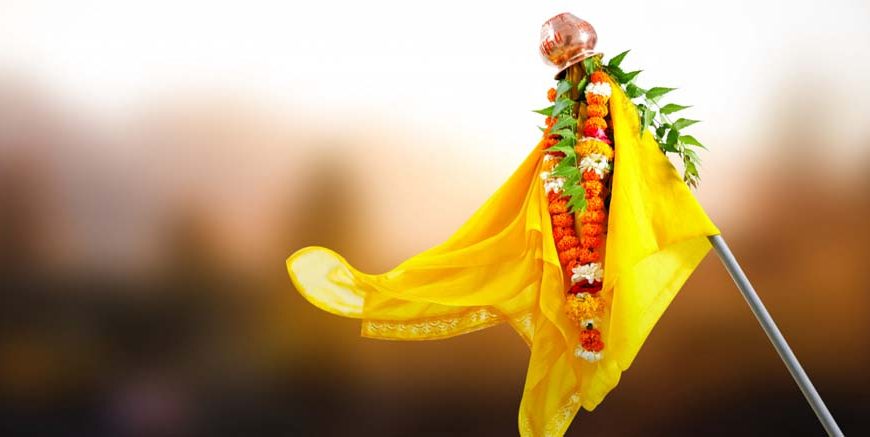
Forget staying up until midnight. Gudi Padwa is the New Year that starts when the sun comes up. It is the first day of Chaitra, the beginning of spring, and for families in Maharashtra and Goa, it is the day the Gudi goes up.
If you are a parent, you know the challenge. You want your kids to connect with their roots. You want them to know why we hoist that colourful cloth on a stick. But explaining mythology to a 3-year-old? That is tough. You need hands-on fun. You need gudi padwa activity for kids that are messy, colourful, and actually make sense to them.
This isn’t just about tradition; it is about memory making. Whether you are looking for a gudi padwa activity for nursery class or just something to do at home, we have you covered. Here are simple, engaging ways to celebrate the festival without turning it into a history lecture.
1. DIY Mini Gudi Making
Gudi is the star of the show. It represents victory and prosperity. Instead of just letting them watch you hoist the big one on the balcony, let them make their own.
- What you need: A small stick (even a chopstick works), a piece of bright fabric, a small kalash (use a tiny plastic cup), and some neem leaves.
- The Fun Part: Let them tie the cloth. Let them decorate the stick. This is a perfect gudi padwa craft activities idea because it builds fine motor skills.
- The Lesson: While they build, tell them the Gudi is like a flag. It tells the world, “We are happy, and we are ready for a new start.”
Read More – Best Group Activities for Students
2. Mango Leaf Toran (The Welcome Sign)
You see those mango leaves hanging on doorways? That is a Toran. It stops negative energy from entering.
- The Activity: Get some real or paper mango leaves. Give your toddler some non-toxic paint or stickers. Let them decorate the leaves.
- For Toddlers: Stringing the leaves is a great gudi padwa activities toddlers can try (with supervision). It teaches them patterns. Green-Yellow-Green-Yellow.
- Why do it: It makes them feel like they contributed to the house decoration. They didn’t just watch; they helped welcome the New Year.
3. The Bitter-Sweet Taste Test
This is the most important ritual. We eat a mix of Neem (bitter) and Jaggery (sweet). It teaches us that life is a mix of both, and we must face it with a smile.
- The Challenge: Most kids hate bitter. Make it a game. A tiny piece of neem with a big chunk of jaggery.
- The Chat: Ask them, “How does it taste?” Explain that sometimes we fall (bitter) and sometimes we win (sweet). This is a gudi padwa activity for small kids that teaches resilience, not just taste.
4. Flower Rangoli (Mess-Free)
Powder colours are a nightmare with toddlers. They get everywhere. Switch to flowers.
- The Setup: Buy some marigolds (Genda) and rose petals. Draw a simple design on the floor with chalk.
- The Task: Ask your child to fill the shapes with petals.
- Why it works: It is sensory play. The textures, the smell, the colours. It is one of the most happy gudi padwa activities for kids because it is beautiful and safe. Plus, cleaning up just means sweeping the petals into the compost bin.
5. Storytelling with Puppets
Kids love stories. Use their toys to act out the story of Lord Brahma creating the universe or Lord Rama returning to Ayodhya.
- EuroKids Tip: At our centres, we use the HEUREKA Curriculum to turn these stories into “Visible Thinking” sessions. We don’t just tell the story; we ask, “If you were Rama, how would you feel coming home?”
- At Home: Use sock puppets. Make it dramatic. The more voices you use, the more they will remember. This is a great gudi padwa activity for nursery age groups where imagination is peaking.
Read More – Creative Storytelling Activities For Kids
Why Culture Matters in Early Years
You might think they are too young to understand. They aren’t. Culture gives a child a sense of belonging. It grounds them.
At EuroKids, we believe that festivals are the best textbooks. Our approach is not about blind ritual. It is about understanding the “Why.” Through our HEUREKA – The Visible Thinking Curriculum, inspired by Harvard University’s Project Zero, we encourage children to ask questions about traditions. We want them to be Superior Thinkers who value their heritage while being global citizens.
EuroKids Admission: The Right Start
If you want a preschool that blends this cultural depth with modern pedagogy, EuroKids Preschool Admission is your next step. We have spent 25 years perfecting the balance between fun and learning. We invite you to visit a centre, meet our teachers, and see how we celebrate every festival with joy and safety. Check out the EuroKids Blog for more parenting hacks and festival guides.
Frequently Asked Questions (FAQs)
1. Is Gudi Padwa safe for toddlers to celebrate?
Yes, absolutely. Just supervise them during the craft activities. Avoid using small beads or toxic paints. Stick to natural materials like flowers and leaves for the safest gudi padwa activities toddlers can enjoy.
2. How do I explain the Gudi to a 3-year-old?
Keep it simple. Tell them it is a “Victory Flag.” It is like a trophy we put up on our house to say we are champions and we are ready for a happy new year.
3. What if my child refuses to eat the Neem?
Don’t force it. You can just touch it to their lips. The idea is to introduce the concept of “bitter and sweet,” not to punish them. You can mix more jaggery to mask the taste!
4. Does EuroKids celebrate regional festivals?
Yes. We celebrate all major Indian festivals. Our HEUREKA curriculum uses these days to teach social skills, history, and values. It is part of our holistic development approach.
5. Are there simple crafts for nursery kids?
Definitely. Paper plate Gudis, tearing and pasting coloured paper to make a rangoli, or just dressing up in traditional clothes are excellent gudi padwa activity for nursery kids. They love anything that involves colours and dressing up.