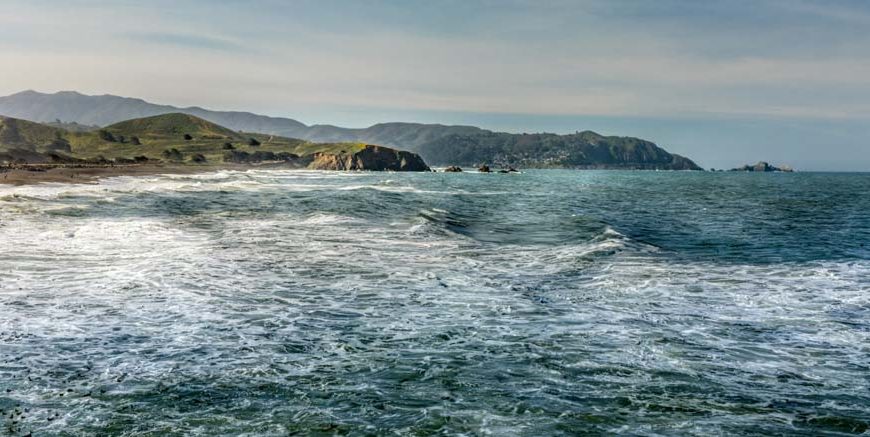
The Pacific Ocean is the largest and deepest ocean on Earth. It plays a very important role in shaping the world’s climate, marine life, and geography.
In school geography, oceans are taught to help students understand Earth’s surface, bodies of water, and global connections. Among all oceans, the Pacific Ocean stands out because of its huge size, unique shape, and rich wildlife.
Here, we will explain what is the Pacific Ocean, its shape, location, features, animals, and amazing facts easily and interestingly.
What Is the Pacific Ocean?
The Pacific Ocean is the largest ocean on Earth, covering nearly one-third of the Earth’s surface. It lies between Asia and Australia on one side and North and South America on the other.
Pacific Ocean Meaning
The name of the Pacific Ocean comes from the Latin word “Pacificus,” meaning “peaceful.” That is why it is also known as the peaceful ocean, even though it experiences strong storms and earthquakes.
Pacific Ocean Meaning in Indian Languages
In the Indian context, the Pacific Ocean is known by different names:
- Pacific Mahasagar (Hindi)
- Prashant Mahasagar in English – “Prashant” means calm
- Prashant Ocean / Prasanta Ocean (common student spellings)
- Pacific Ocean in Kannada – Prashanta Mahasagara
These names are often used in Indian textbooks.
Read More – Oceans of The World
Where Is the Pacific Ocean Located?
The Pacific Ocean is located:
- To the east of Asia and Australia
- To the west of North and South America
- Between the Arctic Ocean in the north and the Southern Ocean in the south
So, when asked where the Pacific Ocean is, the simple answer is:
It lies between Asia, Australia and the Americas.
Pacific Ocean Area and Size
The Pacific Ocean area is about 165 million square kilometres, making it the largest ocean in the world.
Because of its vast size, it is sometimes called an ocean in its own right due to its unique features and global influence.
Shape of the Pacific Ocean
The shape of the Pacific Ocean is roughly triangular and circular, wider near the equator and narrower towards the poles.
- Broad in the middle
- Narrow at the top and bottom
- Uneven coastline
The Pacific Ocean’s shape differs from that of other oceans because it covers such a large portion of the Earth.
Read More – General Knowledge Questions & Answers for Kids
What Is the Depth of the Pacific Ocean?
The depth of the Pacific Ocean is the greatest among all oceans.
- Deepest point: Mariana Trench
- Depth: About 11,034 metres
This makes the Pacific Ocean the deepest water body on Earth.
Features of the Pacific Ocean
Some important features of the Pacific Ocean include:
- Deep ocean trenches
- Volcanic islands
- Coral reefs
- Frequent earthquakes
These features make it geologically very active.
Characteristics of the Pacific Ocean
The characteristics of the Pacific Ocean are:
- The largest and deepest ocean
- Surrounded by the “Ring of Fire”
- Rich marine biodiversity
- Influences monsoon winds
Pacific Sea and Islands
The term Pacific Sea is sometimes used informally to refer to parts of the Pacific Ocean.
The Pacific Ocean contains:
- Thousands of islands
- Island groups like Polynesia, Micronesia, and Melanesia
Many island nations depend on the Pacific Ocean for food and livelihood.
Read More – Exploring Ocean Zones for Kids
Pacific Ocean Animals
Pacific Ocean Animals
The Pacific Ocean animals include a wide variety of marine life.
Some examples:
- Blue whale
- Sharks
- Dolphins
- Sea turtles
- Octopus
- Coral fish
These animals depend on the ocean for survival.
Wildlife of the Pacific Ocean
The Pacific Ocean has the richest marine biodiversity in the world.
Why Is Pacific Ocean Wildlife Important?
- Maintains ocean food chains
- Supports fishing industries
- Helps balance Earth’s ecosystem
Some Amazing Facts About the Pacific Ocean
Here are some amazing facts about the Pacific Ocean:
- It covers more area than all land combined
- Contains more than 25,000 islands
- Has the deepest point on Earth
- Influences global weather patterns
Pacific Ocean Facts for Exams
- Largest ocean
- Deepest ocean
- Named by Ferdinand Magellan
- Important for climate control
These Pacific Ocean facts are useful for exams and quizzes.
How EuroKids Builds Strong Geography Foundations
When geography is introduced through storytelling, visual exploration, maps, globes, and hands-on discovery, young learners begin to understand the world around them in a meaningful way. Instead of memorising place names or directions, children learn by observing, questioning, and connecting ideas. This is why structured early education programs emphasise experiential and inquiry-based learning over rote memorisation.
At EuroKids, foundational geography concepts are nurtured through the HEUREKA – Visible Thinking Curriculum. This approach encourages children to explore their surroundings, understand directions, identify landforms, recognise community helpers, and develop awareness about their environment through interactive activities. Using visual maps, thematic projects, storytelling, group discussions, and observation-based tasks, children are guided to think, ask questions, and make connections about the world they live in.
Concepts such as “my home,” “my neighbourhood,” seasons, weather, transport, and basic map skills are introduced through relatable, real-life experiences. The Visible Thinking framework supports curiosity, reflection, and expression, and helps children articulate what they see, think, and wonder.
With a child-centric and play-based methodology refined over 20+ years and implemented across 1600+ preschools, EuroKids focuses on building curiosity and awareness first, allowing knowledge, confidence, and critical thinking skills to grow naturally over time.
Pacific Ocean Area Compared to Other Oceans
The Pacific Ocean is:
- Larger than the Atlantic and Indian Oceans combined
- Deeper than all other oceans
This comparison helps students remember its importance.
Summary: What is the Pacific Ocean?
To conclude:
- What is the Pacific Ocean? It is the largest and deepest ocean.
- Where is the Pacific Ocean located? Between Asia, Australia and the Americas.
- What is the shape of the Pacific Ocean? Broad and circular.
- It has rich wildlife and amazing features.
Understanding the Pacific Ocean helps students learn geography in a simple and interesting way.
To explore more learning ideas, simple explanations, and early childhood resources, parents
can visit the EuroKids Blog. Those who wish to understand the preschool journey better or
explore enrolment options can find complete information on the EuroKids Preschool Admission
Page, where learning is designed to be joyful, engaging, and child-friendly.