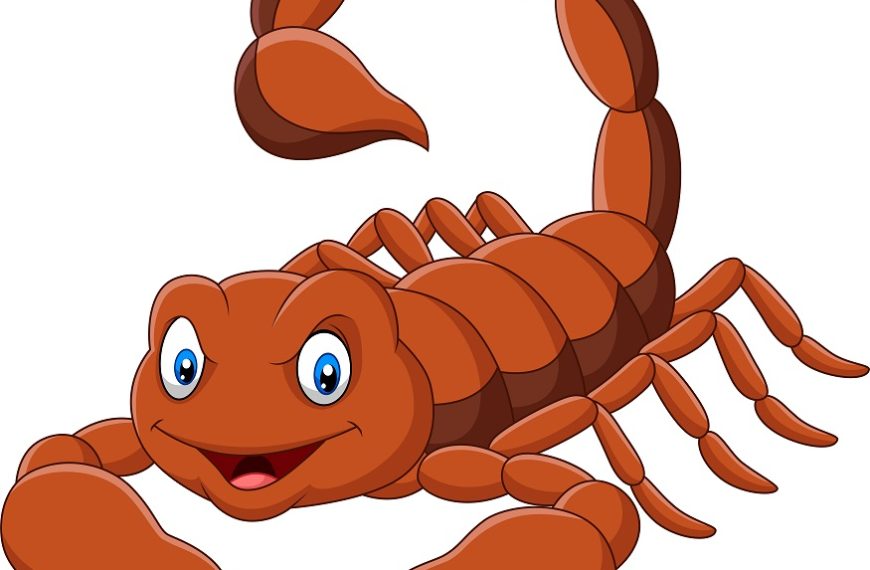
Step out into the dry, sandy dunes of a desert just as the sun dips below the horizon. As the scorching daytime heat fades and the cool night air rolls in, the hidden, nocturnal creatures finally come out to hunt. Among the dusty rocks and hidden crevices, a fascinating eight-legged survivor scurries into the moonlight. With sharp claws raised high and a curled tail ready for action, it looks exactly like a tiny, armored tank patrolling the sand.
While they might seem a bit spooky or intimidating at first glance, these ancient creatures are actually some of the most misunderstood animals on our planet. Let us pull back the curtain and uncover the hidden world of these desert warriors.
What Exactly Are They? Gathering Scorpion Info
Let’s start our adventure with some foundational scorpion info. When people see them crawling around the dirt, they quickly assume they are just strange-looking insects. However, that classification is entirely incorrect. If you want to learn all about scorpions and how they fit into the animal kingdom, you have to look closely at the arachnid family tree.
They belong to the exact same family group as spiders, ticks, and mites. Instead of having six legs and a pair of antennas like a standard garden bug, arachnids proudly walk the earth on eight sturdy legs. Believe it or not, they are incredibly ancient. Fossil records prove that these tough little survivors have been crawling around the Earth for hundreds of millions of years. This means they were successfully hunting and surviving long before the very first dinosaur ever hatched from an egg!
Read More – Arachnids for Kids
Unique Scorpion Features
When you look closely at one, you quickly realize that the physical scorpion features are perfectly designed for survival in harsh, unforgiving environments.
The most famous and recognizable feature is, without a doubt, the long, segmented tail that curves right over their back. At the very tip of this tail sits a sharp stinger called a telson. They use this stinger to inject venom into their prey, stopping fast-moving bugs from escaping. At the front of their bodies, they wield a pair of strong, crab-like pincers known as pedipalps. They use these strong claws to grab their dinner, dig deep burrows in the dirt, or gently hold onto a partner during mating.
Additionally, their entire body is encased in a tough, hard outer shell called an exoskeleton. This shell acts just like a medieval knight’s suit of armor, protecting their soft insides from the blistering sun and hungry predators. They even have tiny, sensitive hairs on their legs that act like radar, allowing them to feel the microscopic vibrations of a tasty cricket walking nearby!
Read More – Facts About Childhood: Meaning, Stages & Development
Glowing in the Dark: Mind-Blowing Scorpion Facts
Are you ready for some truly wild scorpion facts to share with your friends? Here is one of the most bizarre secrets of the animal kingdom: they actually glow in the dark!
If you walk through a desert at night and shine an ultraviolet (UV) blacklight over the ground, any hidden scorpions will magically glow a bright, neon blue-green color. Scientists are still debating exactly why their armor reacts to UV light this way. However, many researchers believe it helps the animal sense how bright the moonlight is, letting them know exactly when it is dark enough to hunt safely.
Another unbelievable fact is their extreme survival skill. They can slow down their internal metabolism so much that they can survive for an entire year on just one single insect meal. Some species can even survive being frozen solid in winter ice or holding their breath entirely underwater for up to 48 hours without any harm!
Essential Scorpion Information
Let’s wrap up our biology adventure with some highly requested scorpion information regarding what they eat and how they take care of their families.
These creatures are strict carnivores. They love to feast on crunchy crickets, beetles, spiders, and occasionally even small lizards. Because they cannot chew solid food like we do, they use their venom to turn the inside of their prey into a liquid, which they simply drink up like a smoothie!
Even more surprisingly, they are incredibly gentle mothers. Unlike many other small creatures that lay eggs in the dirt and leave them behind, these mothers give birth to live babies. When the tiny, soft babies are born, they immediately crawl up their mother’s legs and ride safely on her back. She acts like a fierce, walking school bus, carrying her babies around for weeks until their own outer shells grow hard enough to protect them in the wild.
Read More – Interesting Camel Facts for Kids
Summary
These incredible eight-legged survivors are so much more than just a scary stinger in the desert. From glowing like bright neon signs under the dark moonlight to gently carrying their fragile babies on their backs, their natural adaptations are a true marvel of science.
They remind us that even the most intimidating and fierce-looking creatures have a special, vital role to play in keeping our planet’s ecosystems perfectly balanced. They have survived for millions of years simply by being wonderfully weird and unbelievably tough. The next time you see a picture or a video of one, instead of feeling scared, you can appreciate the brilliant biology of this tiny desert tank.
To read more fun, engaging, and educational articles to share with your children, check out the EuroKids Blog, and visit our website for details on EuroKids Preschool Admission.
FAQs
Are all of them deadly to humans?
Not at all! While all of them do possess venom to hunt small bugs, out of the thousands of different species in the world, only a very tiny handful have venom strong enough to actually harm a human being.
Where do they normally live?
While we usually picture them sitting on hot desert sand, they actually live on almost every single continent! You can find different species hiding in lush tropical rainforests, grassy savannas, and even high up in cold mountains.
Do they have bones inside their bodies?
No, they do not have any internal bones. Instead, they are invertebrates, meaning they rely entirely on their hard outer shell (the exoskeleton) to give their body shape and support.
How big do they get?
It depends heavily on the species! Some are as tiny as a button on your shirt, while others, like the massive Emperor species from Africa, can grow to be over eight inches long