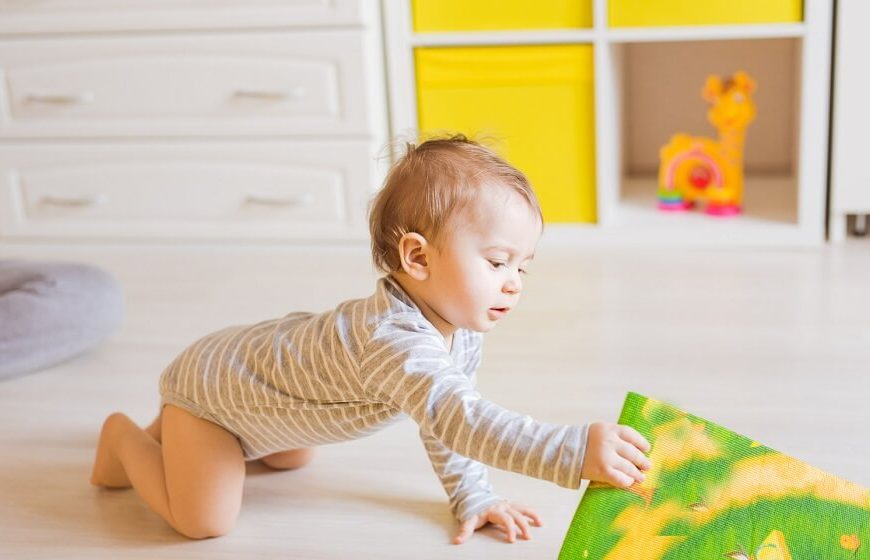
Picture a quiet afternoon in your living room. Your little one is on the floor, staring intensely at a bright, shiny set of car keys just a few inches out of their grasp. They grunt, they wiggle, they push their tiny hands into the carpet, and suddenly, with a clumsy, beautiful forward slide they close the gap. They grabbed the keys! That single, seemingly small movement is the absolute magic.
Watching a child learn to move independently is a thrilling, exhausting, and completely awe-inspiring phase of parenthood. But beneath those cute little knee wiggles lies a highly complex web of physical and mental leaps. If you find yourself constantly wondering about the timeline, the signs, and the science behind this phase, you are in the right place. Let’s break down the ten most important “whats” surrounding this massive developmental leap.
1. WHAT exactly is baby crawling?
At its core, baby crawling is a child’s very first taste of true physical independence. Before this, they relied entirely on you to carry them from the crib to the playmat. Crawling is the biological mechanism that allows them to say, “I see something over there, and I am going to get it myself.” It is a complex coordination of muscles, vision, and balance working together in perfect harmony.
Read More – Differences Between Creeping and Crawling
2. WHAT is the average baby crawling age?
This is usually the biggest question on every parent’s mind. The typical baby crawling age falls somewhere between 6 and 10 months. However, it is crucial to remember that babies are not little alarm clocks that ring on an exact schedule. Some highly active babies might figure it out at six months flat, while others prefer to sit back, observe the world, and wait until they are nine or ten months old to finally hit the gas pedal. Both timelines are completely normal.
3. WHAT are the signs that they are ready?
Long before they actually zoom across the room, babies drop little hints. You might notice them doing tiny “mini pushups” during playtime, lifting their head and chest high off the floor. Another huge indicator is the classic “rocking” phase. They will get up on their hands and knees and rock back and forth like a tiny, unstable boat. They are literally testing their suspension and building up the courage to move a hand forward.
4. WHAT are the different styles of movement?
If you ask a pediatrician, “when do babies start crawling?”, they will also tell you that how they crawl is completely unpredictable! Not every child does the classic hands-and-knees crawl.
- The Commando: They drag their belly flat on the floor, using only their arms to pull themselves forward, exactly like a tiny action hero in the mud.
- The Bear Crawl: They keep their arms and legs completely straight, walking on their hands and feet with their bottom stuck high in the air.
- The Crab: They push themselves backward or sideways instead of going forward. It is hilarious to watch, but it gets the job done!
Read More – Guide to Baby’s First Steps
5. WHAT triggers the desire to move?
Motivation is everything. A baby will not move unless they have a really good reason to. Usually, that reason is a colorful toy, a pet dog walking by, or simply wanting to reach your arms. Think of it like a fun game. If you place a favorite object just slightly out of their reach, their natural curiosity kicks into overdrive, forcing their brain to figure out how to transport their body to that object.
6. WHAT happens in their brain during this phase?
This milestone isn’t just a workout for the arms and legs; it is a massive workout for the brain. When a baby moves their right arm and left leg at the exact same time, it forces the left side and the right side of their brain to talk to each other. This is called “cross-lateral coordination.” It is the exact same brain power they will use years later to read a book from left to right, write with a pencil, or catch a baseball!
7. WHAT is the secret to helping them practice?
The absolute best tool you have is regular “tummy time.” Imagine trying to run a marathon without ever jogging first. Tummy time is their training ground. When a baby spends time playing on their stomach, they are forced to lift their heavy head, which builds a strong neck, sturdy shoulders, and a tight core. Those are the exact muscle groups required to eventually push up onto all fours.
8. WHAT if my child skips this milestone entirely?
Believe it or not, some perfectly healthy, brilliant babies never crawl. Some babies figure out how to scoot around on their bottoms (called bottom-shuffling), while others simply decide to stand up and walk early. As long as your child is finding a way to coordinate both sides of their body to explore their environment, skipping the traditional hands-and-knees phase is rarely a reason to panic.
9. WHAT should parents do to prepare the house?
Once they start moving, they are remarkably fast. This is the time to baby-proof everything. The best way to do this is to literally lie flat on your stomach on the living room floor. What do you see? Are there loose electrical wires? Sharp coffee table corners? Tiny coins hidden under the sofa? Getting down on their physical level shows you exactly what hazards look tempting to a curious, crawling explorer.
10. WHAT comes next after this adventure?
Once they master the floor, they will quickly look upward. The next natural progression is “pulling up.” They will grab onto the edge of the couch, your pant leg, or a sturdy chair to pull themselves into a standing position. From there, they will start “cruising” (walking sideways while holding onto furniture), eventually leading to those magical, wobbly first independent steps.
Read More – When Do Babies Stand Without Support and Walk
Summary
Watching your little one conquer the living room rug is so much more than just a cute photo opportunity. It is the breathtaking realization that your child is mapping out their own universe.
Every single wobbly pushup, funny backward slide, and triumphant grab of a toy is building their physical strength and their mental confidence. But on a deeper, emotional level, crawling is incredibly symbolic. It is the very first time in their life that they possess the physical power to actively move away from you. It quietly introduces us to the greatest, most difficult lesson of parenting: learning how to safely let them go explore the world, while always remaining the safe home base they can quickly crawl back to.
To discover more insightful parenting tips and navigate these beautiful early years, head over to the EuroKids Blog, and don’t forget to check out the details for EuroKids Preschool Admission for your little explorer’s next big step.
FAQs
1. Can carrying my baby too much delay their crawling?
Yes, it can. While cuddling is wonderful, babies absolutely need unstructured floor time. If they are always in a carrier, a swing, or your arms, they don’t get the chance to build those essential core muscles.
2. Should I put shoes on my baby when they learn to crawl?
No, bare feet are best! Being barefoot allows their tiny toes to grip the floor, helping them push off and balance much easier than if their feet were trapped inside slippery shoes or thick socks.
3. Why does my baby crawl backward instead of forward?
This is totally normal! A baby’s arms are usually much stronger than their legs at first. When they push up, their strong arms accidentally push their body backward. They will figure out the forward gear once their leg muscles catch up!